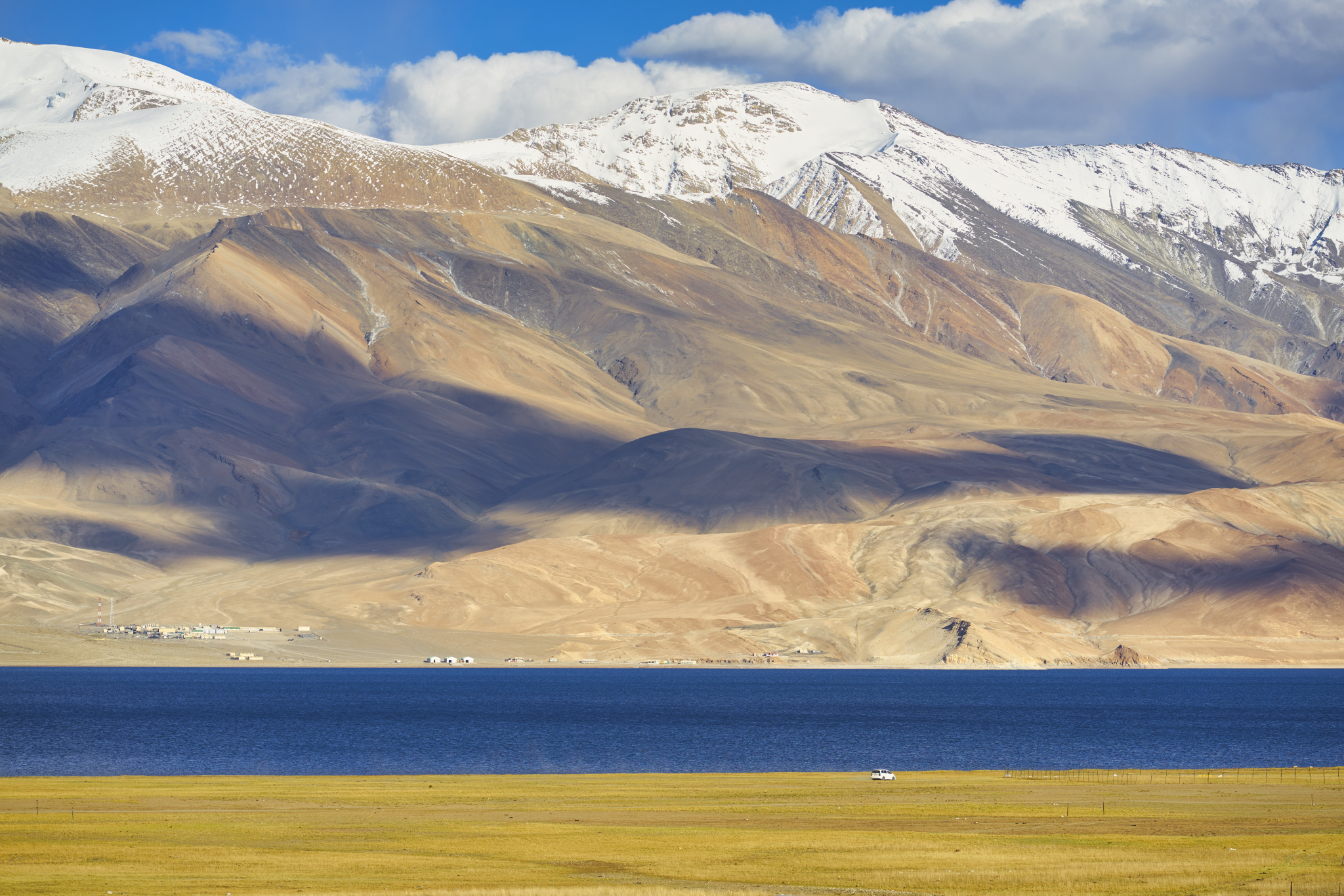
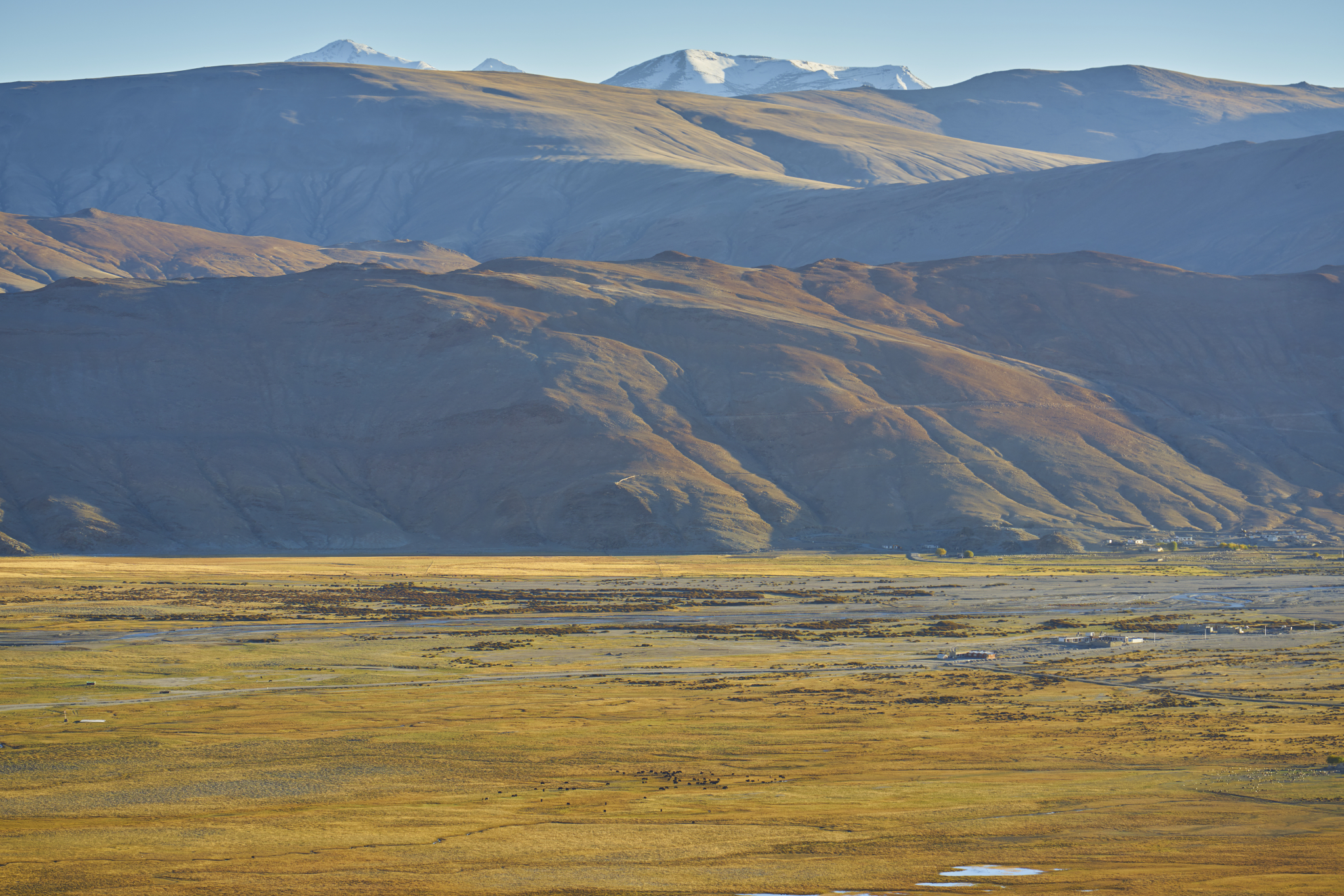
We reached Hanle in late afternoon. The light at altitude does something different. Sharp. Clear. Golden even though the sun was still high.
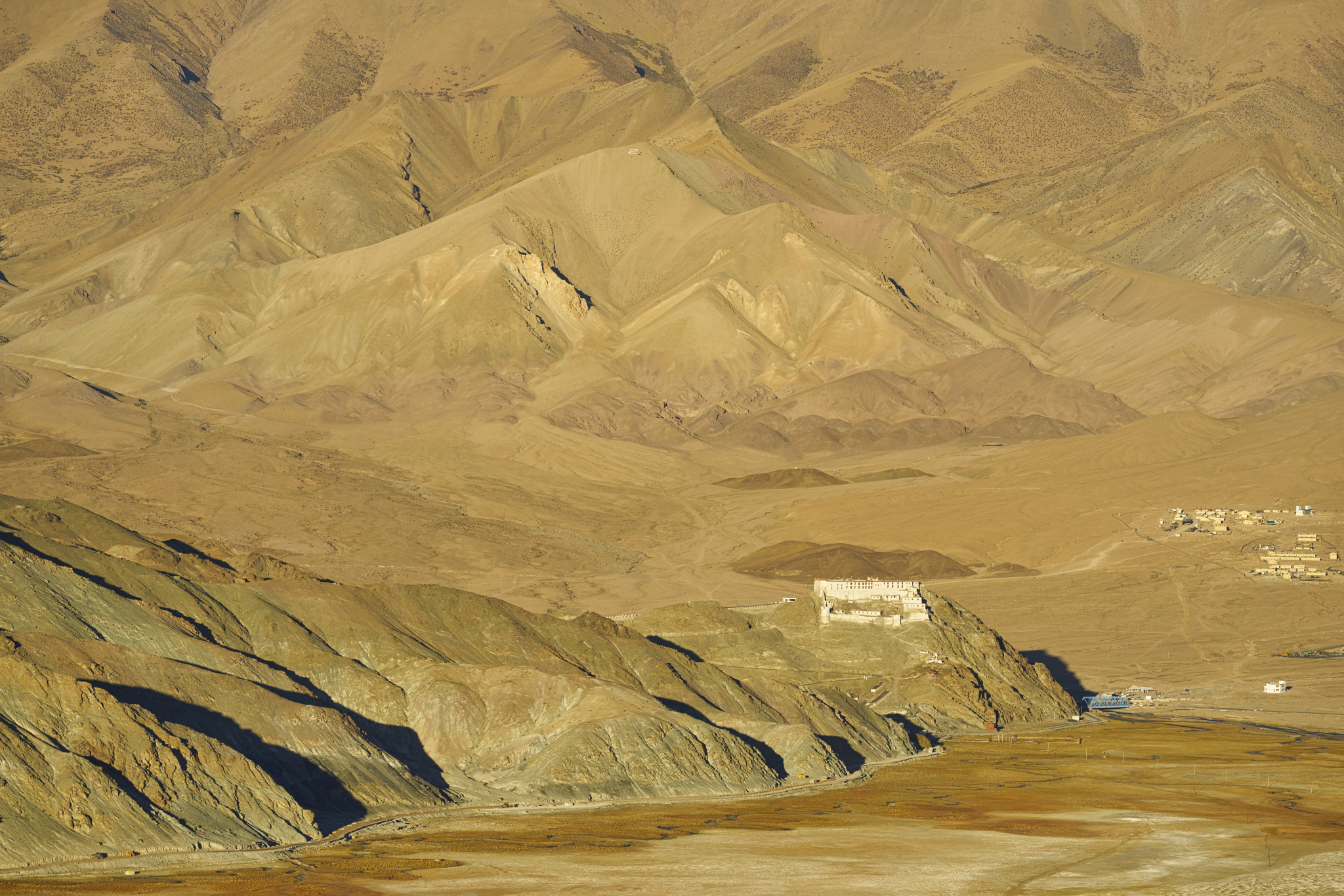
The village sat small in the valley. Mountains on all sides. And there on a ridge—white walls against brown rock. The monastery.
My wife saw it first. Pointed.
Someone had carried stones up that ridge, mixed mortar, built walls. Now it just sat there. Prayer flags between rooftops, colors faded. White against brown rock.
The Observatory
We checked in at Hanle House first. Queen bed, couple of chairs, a table. Barely enough space for luggage. Then back in the vehicle, driving up toward the dome.
The observatory sat behind a fence. The Indian Institute of Astrophysical Observatory. One of the highest in the world. Built here because at 15,000 feet, the darkness was dark enough.
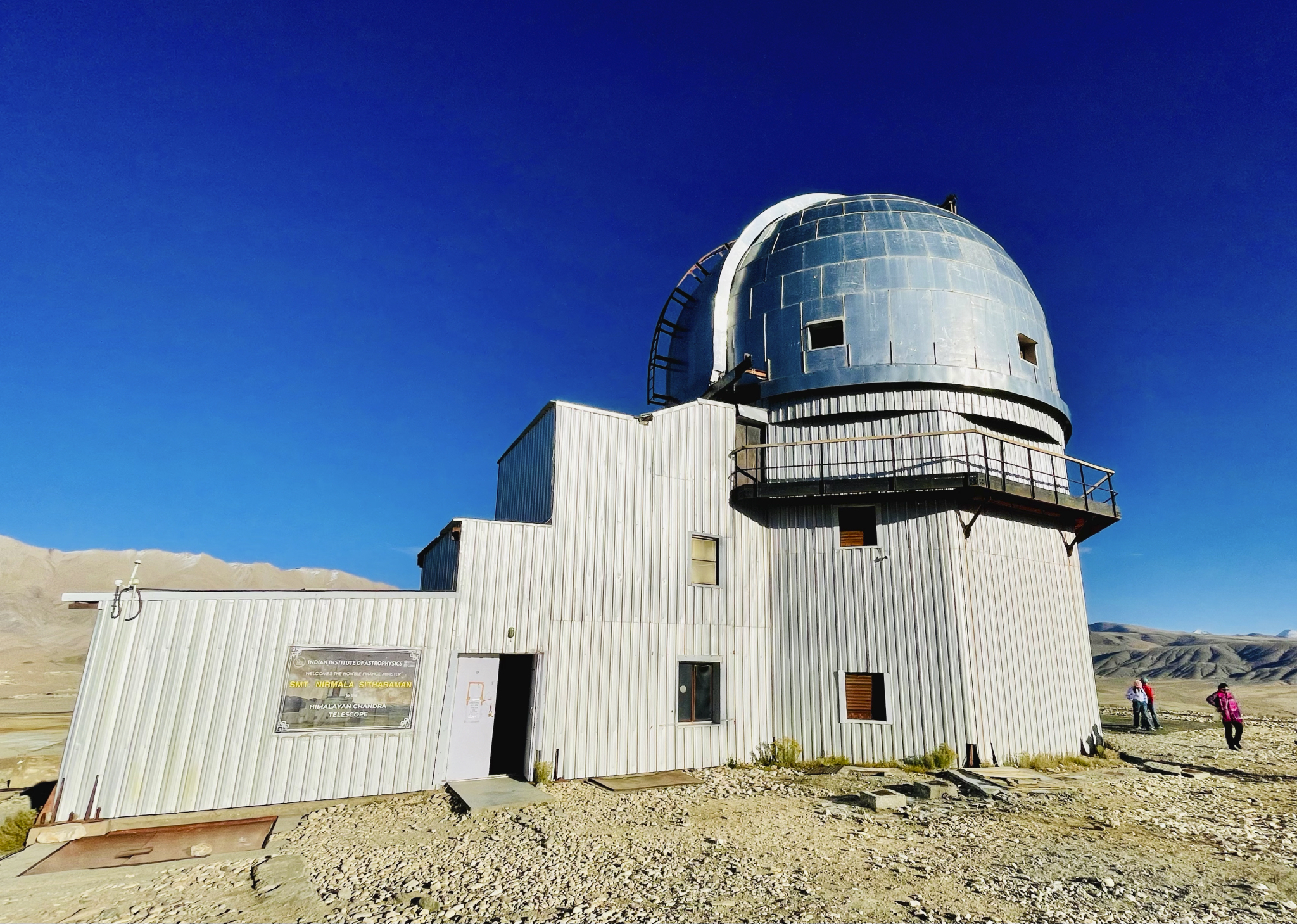
The door was open.
Inside, the temperature dropped. Displays lined the walls, screens glowing with information about altitude, atmospheric conditions, why this particular valley. How the telescope was operated remotely from Bangalore—astronomers hundreds of miles away pointing instruments at Ladakh’s sky, gathering light that had been traveling for years.
We climbed the stairs to the dome.
The telescope rose from the center of the floor. White tube mounted on a mechanism that could track objects across the sky. Not the largest I’d seen, but standing here at 15,000 feet, it felt different. Purposeful in a way museum telescopes never had.
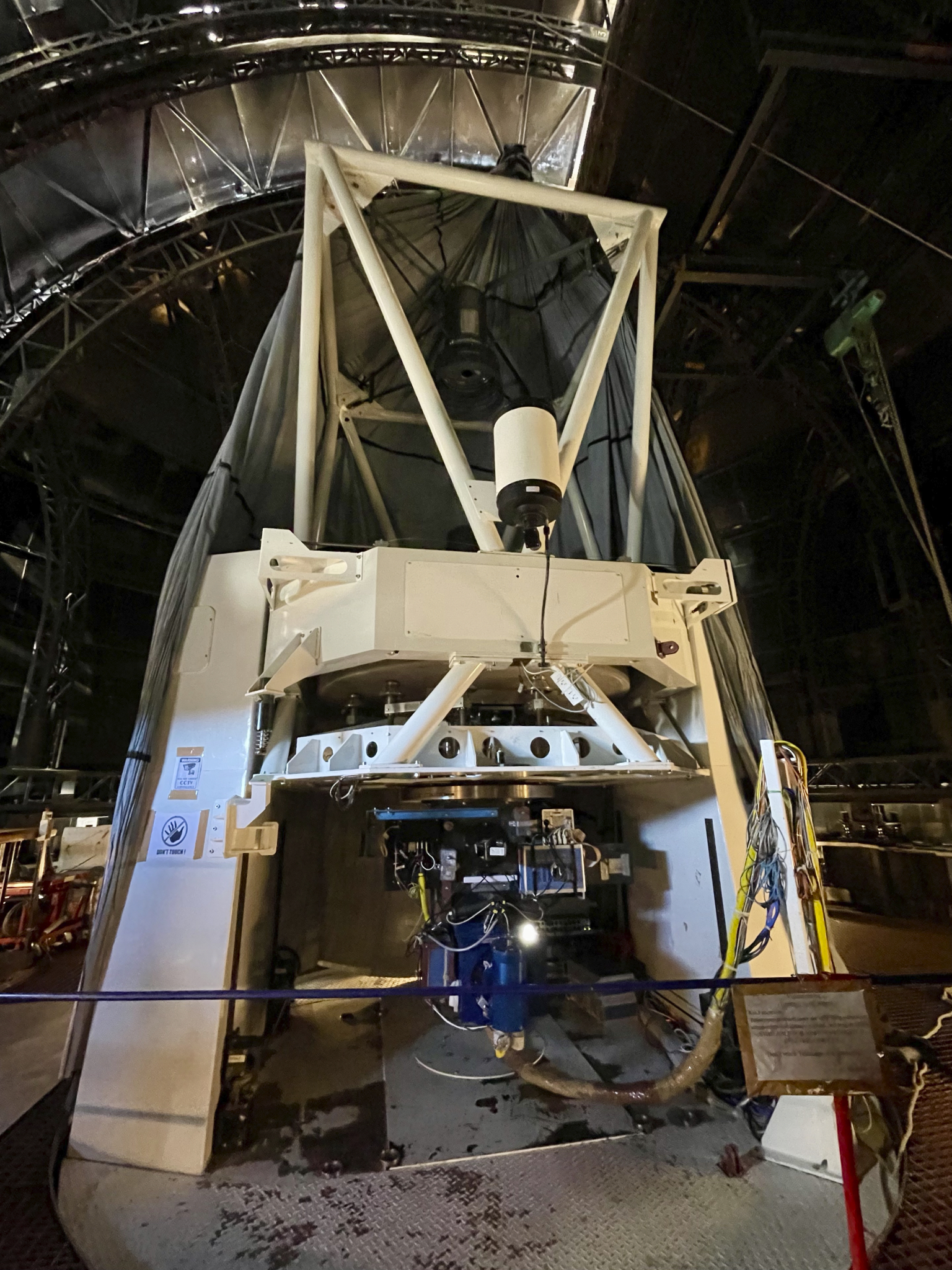
Footsteps on the stairs behind us. A woman appeared with three men in uniform, slightly out of breath from the climb. Young. Official jacket. The army officials looked comfortable at altitude. She glanced at everyone, gestured toward the telescope.
She moved to it with easy familiarity. “Two-meter aperture. Optical-infrared range. Everything’s controlled from Bangalore now. They point it, make the adjustments, collect the data.” She gestured upward toward the dome. “On a clear night here, you can see the Milky Way so clearly it casts shadows on the ground. The telescope sees much more. But it’s the darkness that makes any of it possible.”
“What do you observe?”
“Distant galaxies. Binary star systems. Objects so far away their light has been traveling since before humans existed.” She moved around the telescope. “We’re looking at the past, really. By the time we see it, the source might have changed completely. Might even be gone.”
“And then what do you do with it?”
“We analyze the wavelengths. Build models of what’s happening out there based on the light that arrives here. It’s detective work, in a way. Reading evidence that’s been traveling toward us longer than we’ve been alive.”
I thought about Dadabhai. Dr. Surendra Nath Ray, the biochemist who’d spent his career reading evidence in cells and molecules. But at night he’d taken my father and aunts to the terrace, pointed up, taught them constellations. Different scales of observation. Different tools for understanding what persists.
“Tonight should be excellent,” the woman said. “Very clear forecast. You should definitely look up.”
We thanked her and made our way back down the stairs.
Outside, the light had shifted. Lower angle, deeper gold. The mountains were sharpening into planes of light and shadow, the transitions between them suddenly distinct.
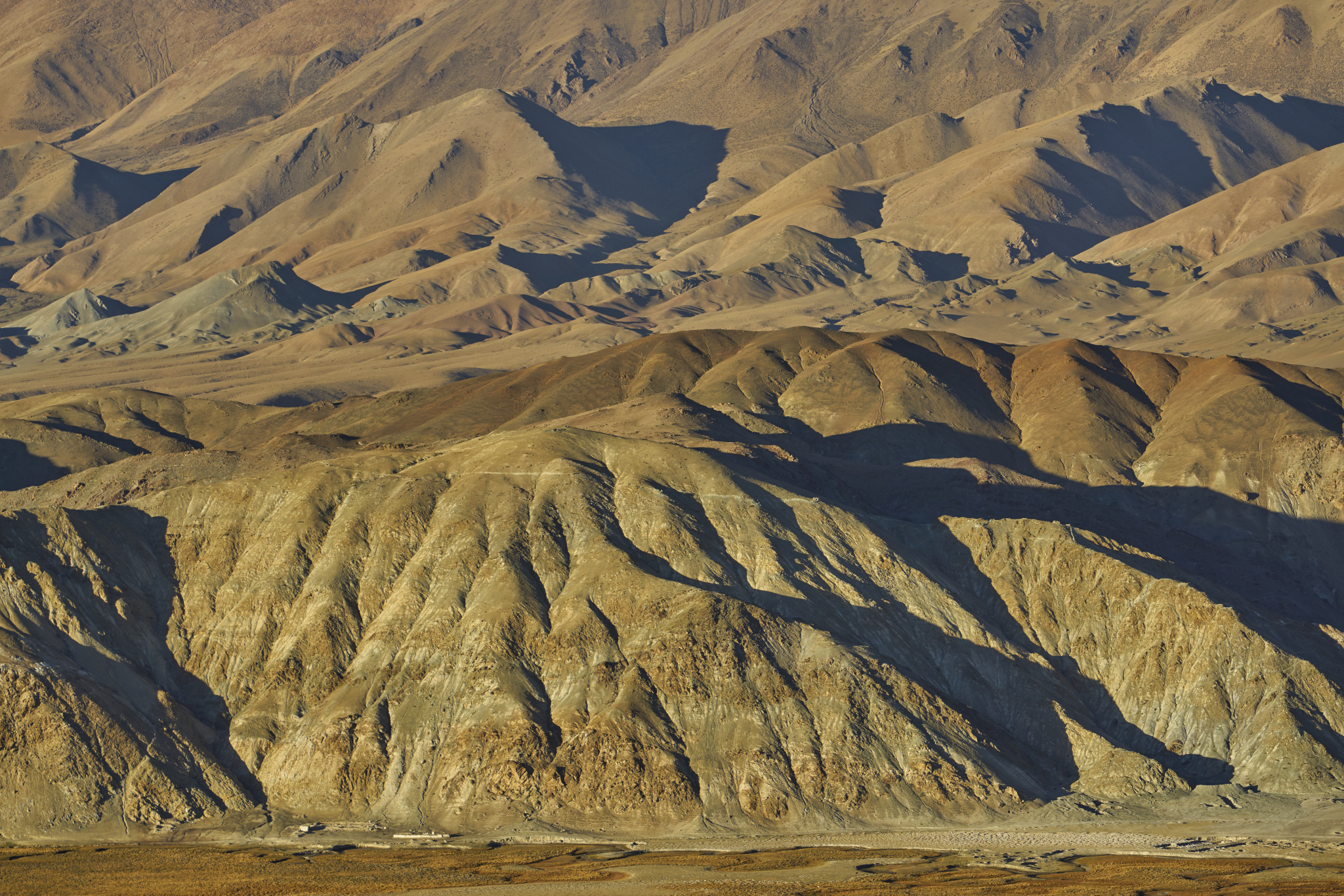
On the drive back down the hill, I thought about what the guide had said. How they see things by measuring light. Not that different from memory, really. We measure what’s left. Try to reconstruct what was there.
The telescope and my grandmother doing the same work, just with different instruments. Both trying to read light to understand its source.
Evening
Back at Hanle House, my wife lay down to rest. I stood at the window watching the monastery grow smaller in the dimming light. Still there on its impossible ridge, white walls going gray as the sun dropped.
The light kept changing. Gold became orange. Orange deepened to red. The mountains turned purple, then blue, then gray, then indistinct shapes against darkening sky.
Dinner was served at Hanle House. Dal and rice, chapatis, tea so hot it scalded. We sat in a low semi-circular arrangement, traditional Ladakhi style. A family from Bangalore sat opposite us. We talked—about Ladakh, about Bangalore, about the journey up. The altitude seemed to affect volume as much as breathing. Everyone spoke quietly.
Afterward, walking back to our room through dim corridors, I could see through the windows how few lights there were outside. Single-story structures. Prayer flags invisible now. A few generators humming. The darkness here was deliberate, protected.
The Window
I couldn’t sleep. The bathroom was too cold to use comfortably, and I was too aware of the sky outside.
I got up quietly. Went to the window. Opened it.
The air hurt coming in.
The sky.
I’d seen dark skies before. Been camping in remote places. Looked up and thought I understood what people meant when they talked about stars.
I hadn’t understood.
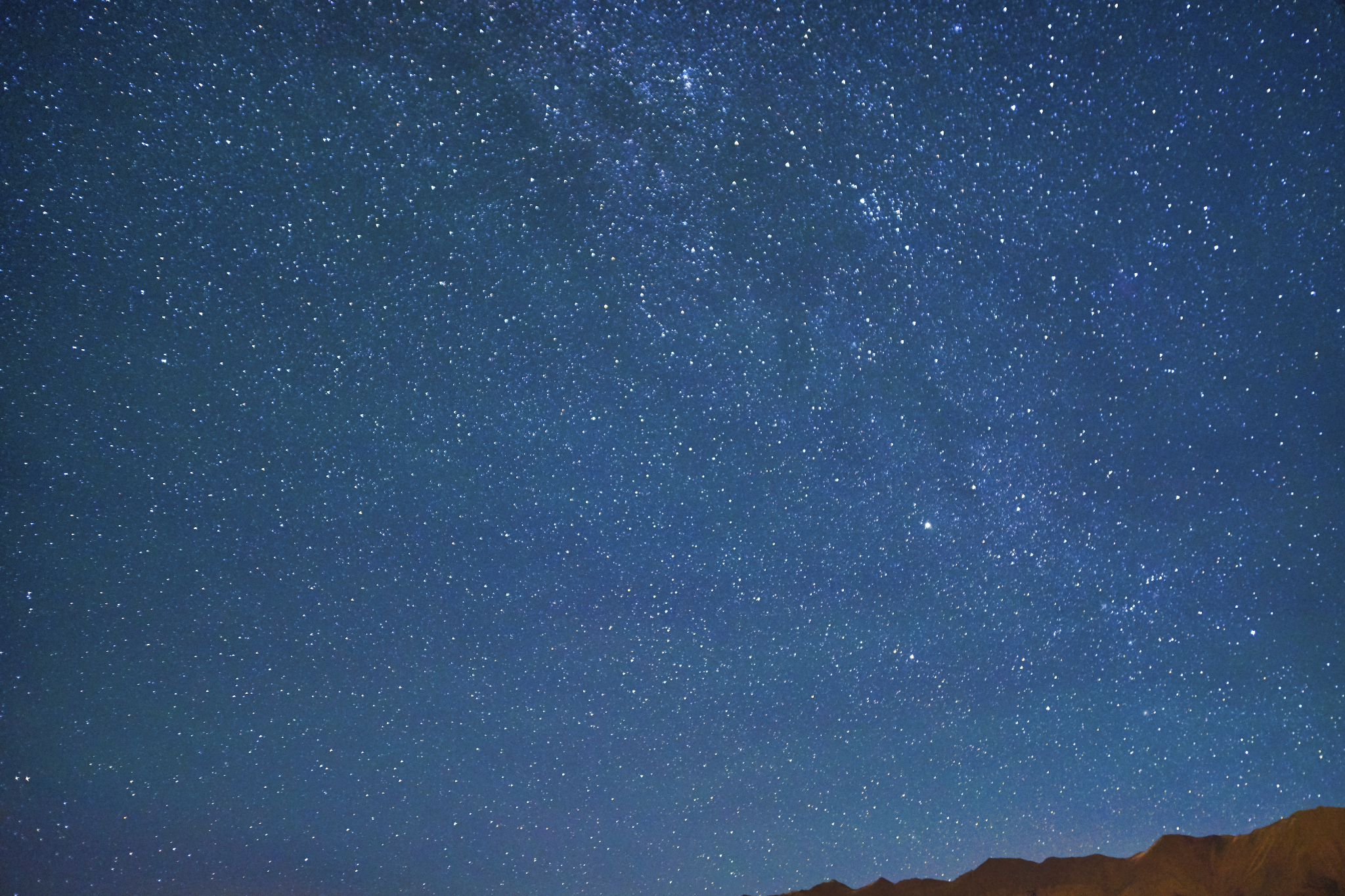
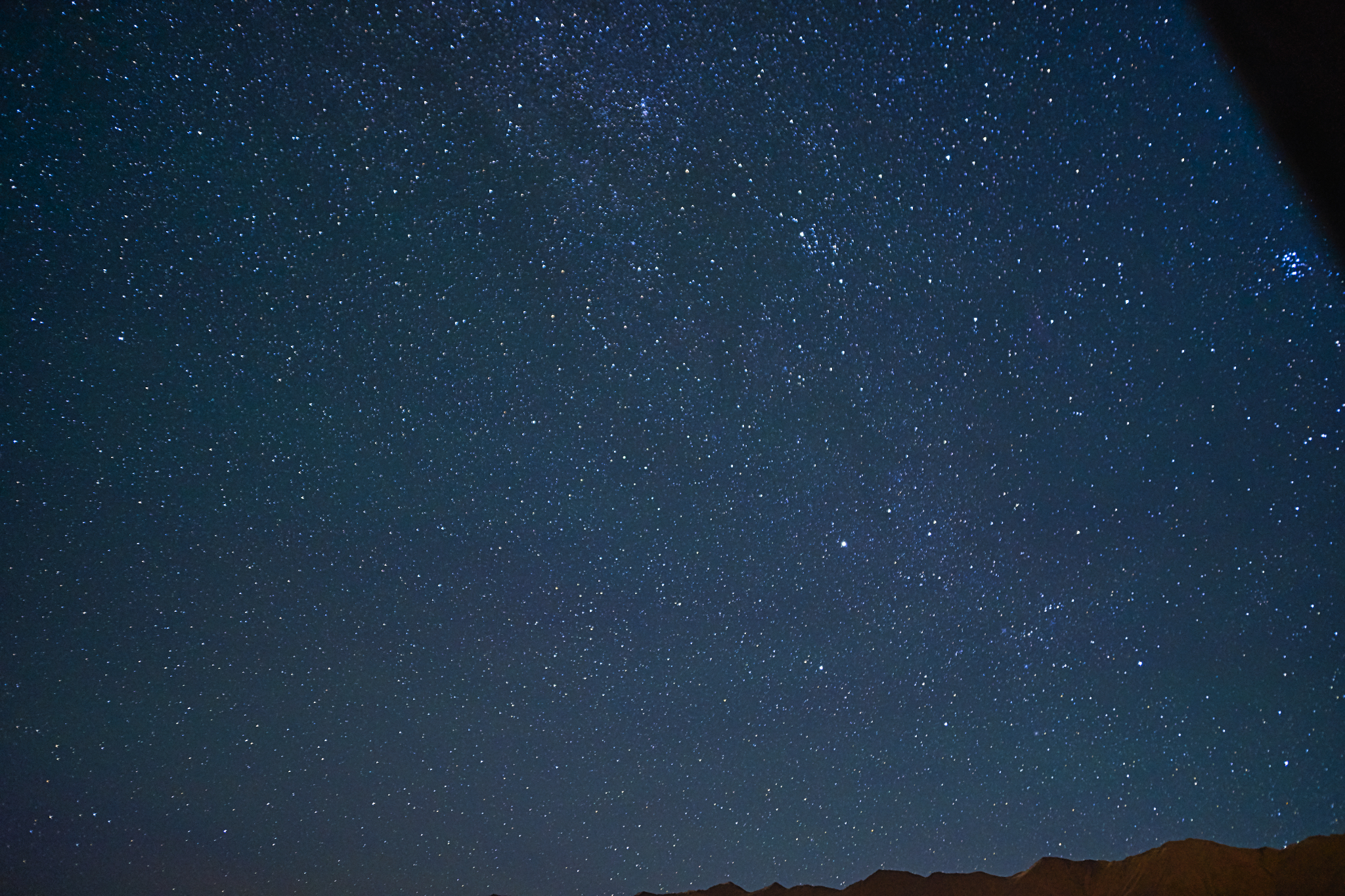
The sky above Hanle was so dense with stars it didn’t look like sky anymore. It looked solid, textured, like something you could reach up and touch and feel surface beneath your fingers.
The Milky Way cut across the darkness—not a faint smudge but a river of light with depth and complexity. I could see dark lanes where dust clouds blocked the light behind them. Bright clusters. Colors that weren’t just white but blue and red and gradations between.
Stars everywhere. Not hundreds. Thousands. Maybe more. So many the familiar constellations were hard to find. Orion was there somewhere, buried. The Big Dipper visible but surrounded by so much light it barely stood out from the rest.
I stood there with cold air pouring through the window, and what came to mind was my grandmother.
I was nine years old. Summer night in Kolkata, three years after Dadabhai died. The city had a power cut—not unusual then—and my grandmother took me up to the terrace. The streetlights were dark. The building lights were dark. The sky above the city was suddenly visible in a way it normally wasn’t.
She pointed up with one bony finger. “Dadabhai is up there,” she said. “In the stars. Watching over you.”
I’d been young enough to half-believe it. Old enough to know it couldn’t literally be true.
But standing here at this window in Hanle, I understood what she’d been trying to tell me. Not that people become stars—they don’t. But something about persistence. About light continuing after its source has ended. About looking up and finding brightness instead of emptiness.
Dadabhai had taught my father and aunts the stars when they were children. Showed them constellations. Explained what they were seeing. And after he was gone, my grandmother used those same stars—his stars—to help me understand that something continues. That what seems ended is still somehow present.
I looked for constellations now. Tried to find the patterns he would have shown them. Orion somewhere in all that light. Cassiopeia. The Big Dipper. Shapes I’d learned as a child, now almost invisible in the overwhelming brightness.
Maybe that was the point. Not to locate a specific star. Not to find him. Just to look up and see the sky was full. That darkness, when it’s dark enough, reveals light.
I went to my bag. Got the camera and the small portable tripod. Set it up on the windowsill, the metal cold against my hands.
Long exposure. High ISO. Wide aperture. I was trying to capture what I was seeing, but really I was doing what the telescope did—collecting light that had been traveling for years, turning it into something that would persist beyond the moment of seeing.
I opened the window wider to get the frame clear. The Milky Way cutting across. Mountains silhouetted below.
Hit the shutter.
The camera began its countdown. Thirty seconds. The sensor gathering photons. Building an image from light that had left its source years ago, centuries ago, traveling through space to arrive here, now, at this window.
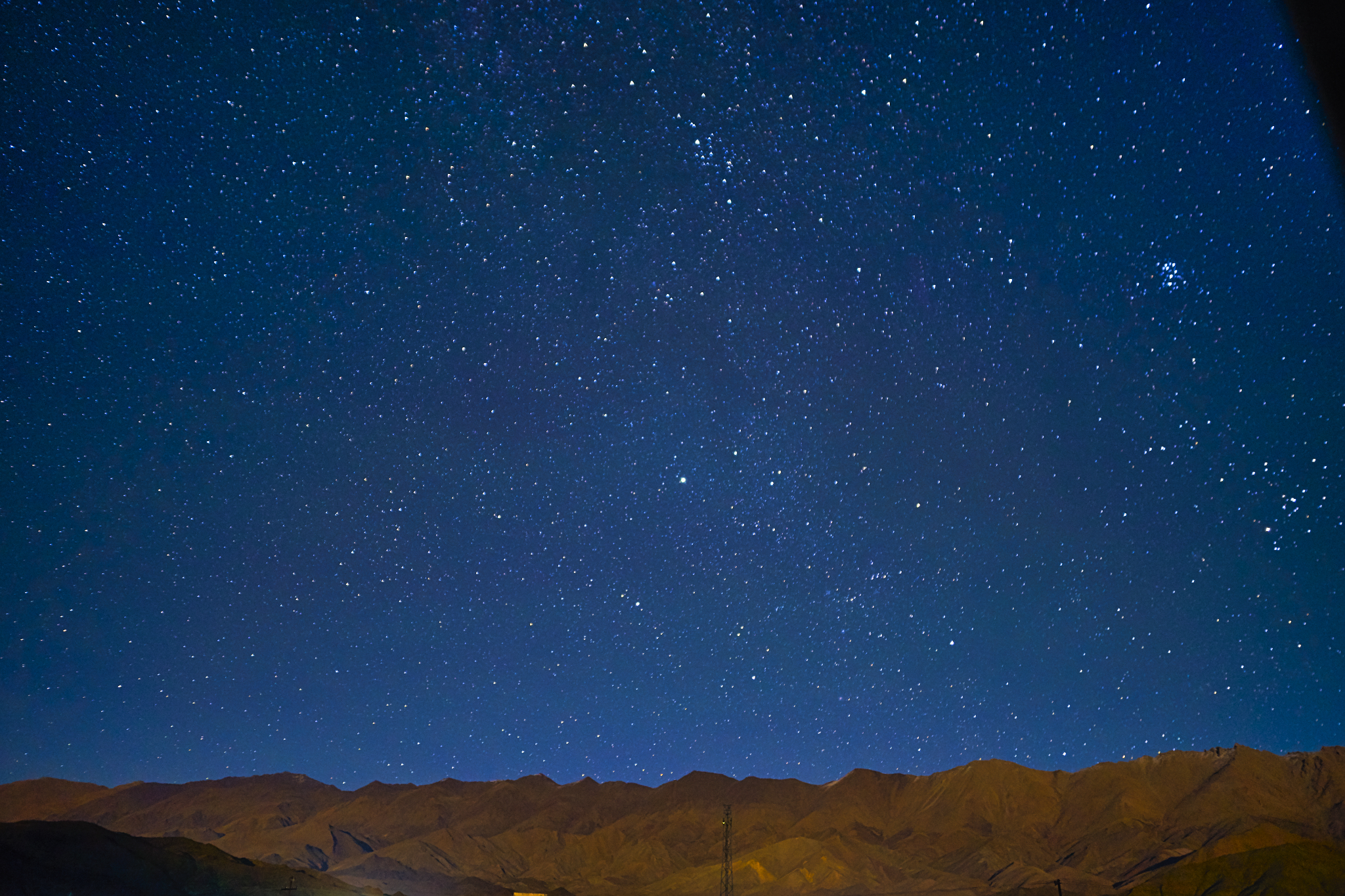
I took another exposure. Another. The wind coming through was brutal. My fingers were going numb. But I kept shooting, adjusting the frame slightly each time, trying to hold onto this.
Behind me, my wife stirred. The cold must have reached her even under the blankets. She pulled them tighter, shifted position, but didn’t wake.
One more shot. Then I closed the window.
The sudden absence of wind made the room feel warmer, though the temperature hadn’t changed. I packed the camera away carefully, my hands clumsy from cold. Stood looking through the glass at the sky I could no longer feel against my face.
The stars were still visible through the window. Dimmed slightly by the glass. But there. Still bright. Still holding their light in the darkness.
I thought about the memorial we’d stopped at on the drive to Hanle. Rezang La. One hundred and fourteen men who’d died defending a ridge at 16,000 feet. They’d seen this sky the night before they died—that November night in 1962, looking up at the same stars. The same light arriving from the same sources, witnessed by different eyes across decades.
The memorial had the national flag and regimental colors. The observatory had its telescope. I had my camera on the windowsill. Different tools, but all trying to make sense of the same thing—what persists after ending. What can still be measured, witnessed, remembered. What light reveals about sources that might be gone.
My grandmother had used the simplest tool—her bony finger pointing up into the darkness of a power cut. She’d tried to tell me something I wasn’t ready to understand then. That persistence is real. That we send light out into the darkness and it continues, traveling, arriving at eyes that weren’t even open when it began its journey.
I got back into bed. Pulled the blankets up. The room was cold, the window closed now, but I could still see the sky through the glass. The stars still there. Still bright. Still holding their light.
Morning
Gray light woke me. Dawn. The sky through the window had lost its stars—drowned in daylight now, though they were still there if instruments could see them.
My wife was already up, standing at the window in her jacket. Looking out at the monastery on its ridge, the mountains behind it catching early sun.
“Did you sleep?” I asked.
“Some. You?”
“Some.”
“I felt the cold at one point. You had the window open?”
“Taking pictures.”
She nodded. Didn’t ask to see them. We’d look later. Not now. Not while we were still here.
I got up, went to stand beside her. The monastery looked different in daylight—less mysterious, more practical. A building made of stones and mortar. Prayer flags visible now, their colors bright in the morning light. Yesterday’s impossibility had become this morning’s simple fact.
But tonight, I thought, when darkness returned, the stars would be there again. The Milky Way cutting across. Light arriving after traveling for years, for centuries, for millennia. And someone else would stand at a window or point a telescope upward and see what darkness holds when you’re far enough from artificial brightness to let it show itself.
That’s what Hanle offered. Not just the stars themselves, but the quality of darkness needed to see them properly. The absence that makes presence visible.
My wife turned from the window. “We should get ready. Long drive to Tso Moriri.”
We’d leave Hanle today. Drive to Tso Moriri, another high lake in another valley. But I’d carry this. The memory of that sky. The understanding my grandmother tried to give me forty-one years ago on a terrace in Kolkata during a power cut. That if you look carefully, if you wait for the darkness to be dark enough, what seems empty reveals itself as full. Full of light that’s been traveling toward you longer than you’ve been alive. Full of persistence. Full of evidence that things continue long after their source has ended.
Dadabhai had taught my father to see stars. My grandmother had used those stars to teach me about loss. And now I stood in Hanle with a camera, continuing what they’d started. Looking up. Bearing witness. Reading light.