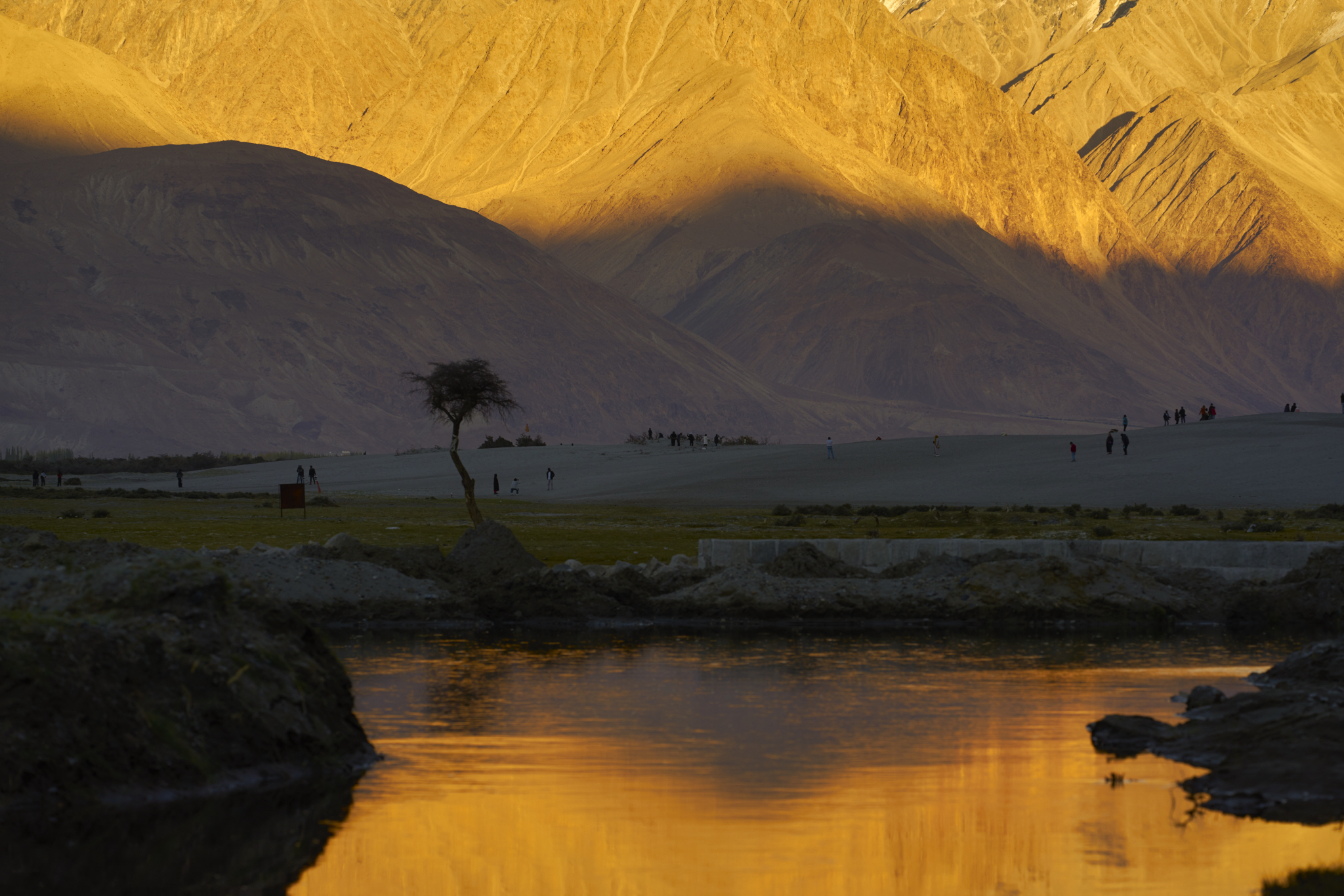
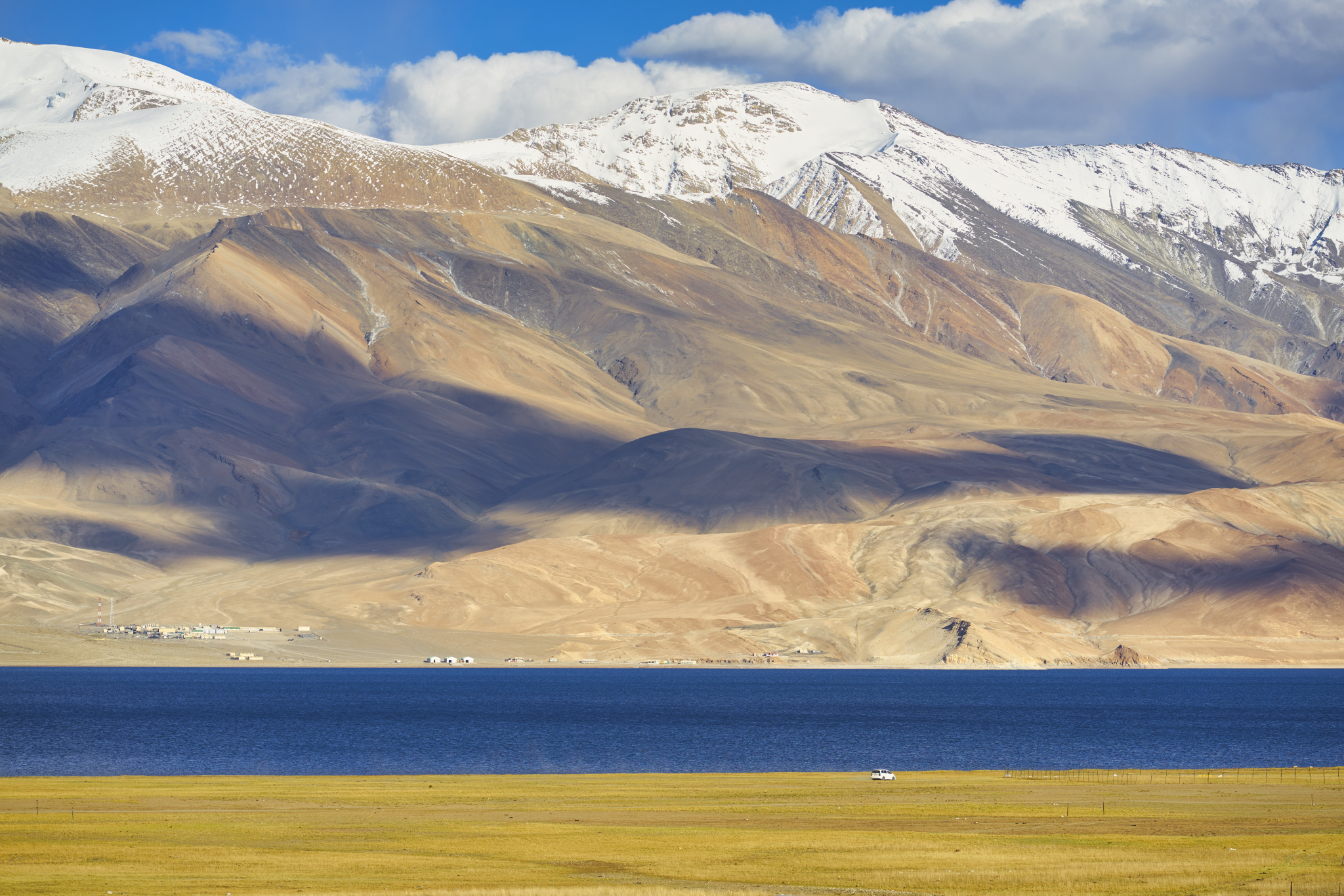
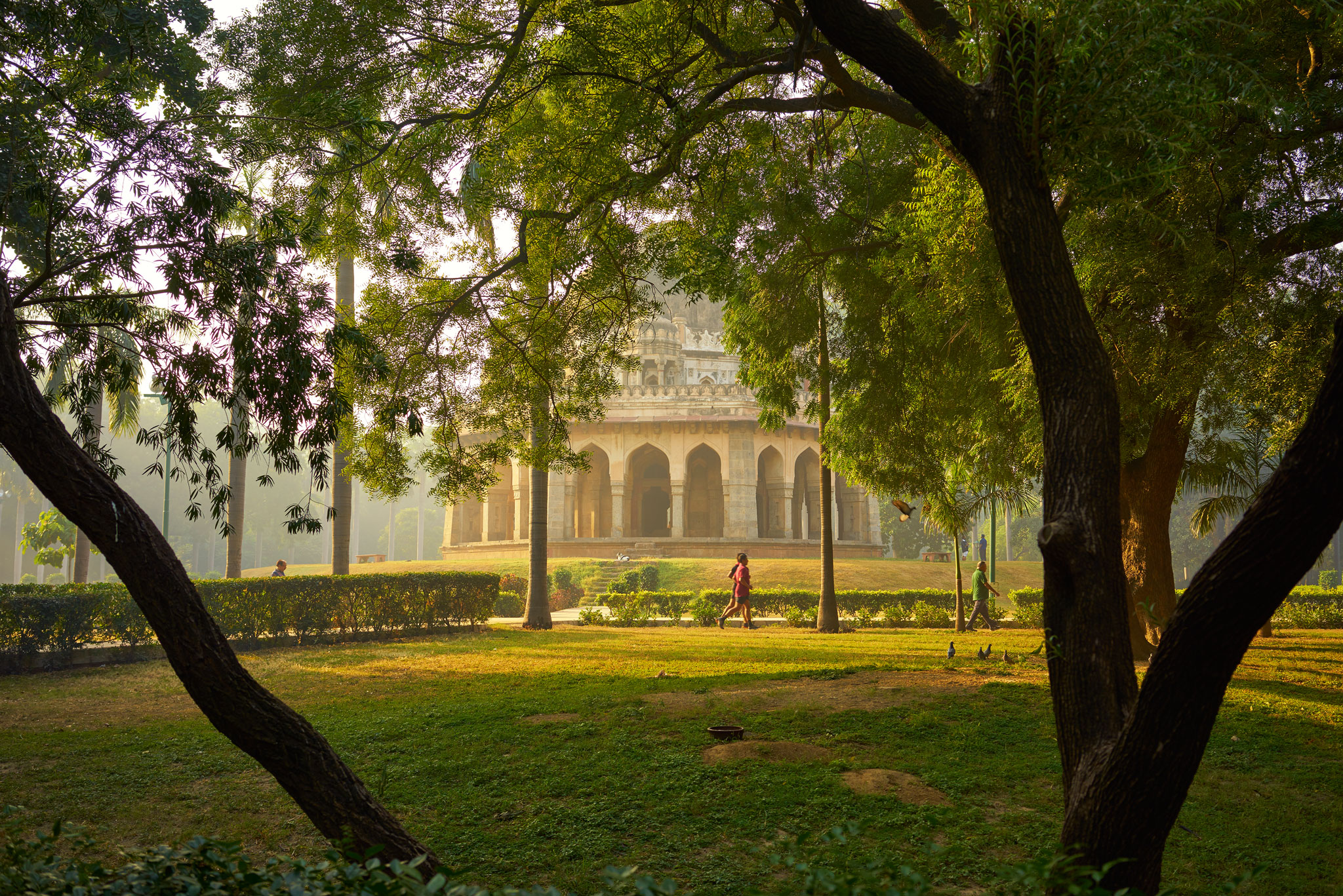
There is a particular kind of silence that settles over departure. Not the silence of absence, but the silence of transformation—when a place you’ve come to know begins its slow dissolution into memory. On our third day at Pangong Tso, after our walk along the shore, I felt that silence. The lake was still there, still blue, still impossible. But something had shifted. We’d spent two days learning its moods—walked its edge, touched its stones, let its cold claim our attention. It was time to leave before familiarity turned wonder into wallpaper.
We were heading to Hanle. The road climbed away from Spangmik and curved south, following the lake’s shore toward where it tapers and crosses into China. Merak lay somewhere along that route—a name on maps I’d studied without quite believing it was real.
I’ve Been Here Before
The landscape approaching Merak did something I didn’t expect: it reminded me of Montana.
Not in obvious ways. The altitude was wrong. The mountains were wrong. But something in the quality of space was identical. The way distance worked. The sense of land stretching to the edge of what eyes can process.
I’d driven across Montana alone, years ago. Over forty-one hundred miles through seven states in seven days. Montana was where the driving became meditative—hours of the same road unfolding through landscape that made me feel pleasantly insignificant. Vast stretches of grassland and sage. Mountains at a distance, holding onto a promise they never quite delivered.
I’d been alone for that. Driving in the kind of solitude that lets you think too much and also exactly enough.
Here, approaching Merak with my wife beside me, I felt it again. The Ladakhi high-altitude desert stretching brown and gold. Mountains ringing the valley, close enough to see their striations but far enough to remain apart.
“This looks like America,” I said. “Montana.”
My wife looked out with fresh attention. “I can see it. The same kind of openness.”
Not empty. Full of space.
There’s something humbling about discovering that landscapes repeat. That certain combinations of geology and climate produce similar effects regardless of which side of the planet you’re on. As if the earth has a limited vocabulary and just recombines the same words. Vast. Arid. Distant. Mountains. Sky.
I didn’t think then about what else had repeated. That came later.
Blue as Proximity
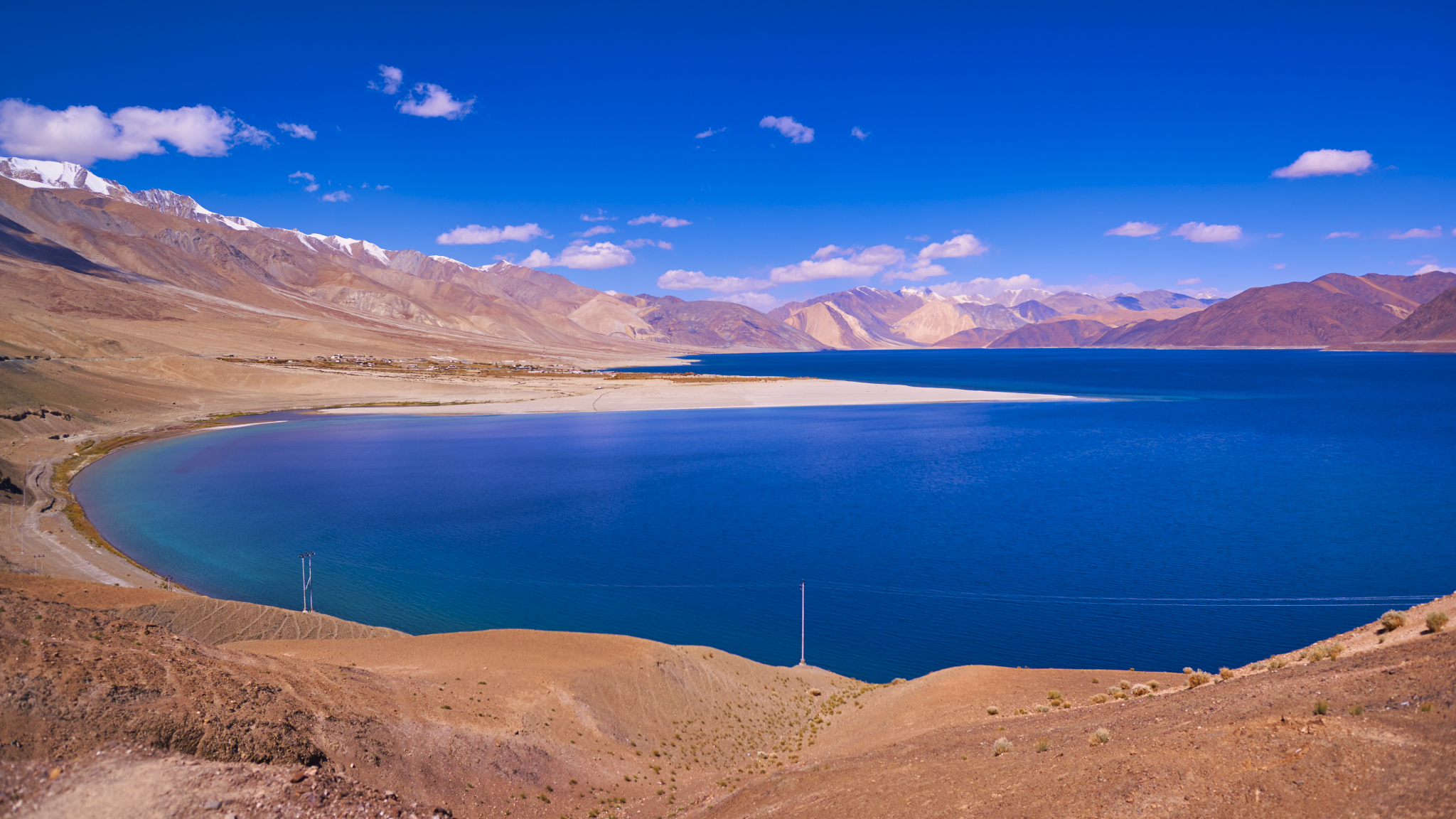
Merak announced itself with a shift in the lake’s position. Suddenly it was closer. Near enough that I could see individual stones beneath the surface. We pulled over without discussion.
The blue had changed. Where Spangmik’s waters had been deep and theatrical, Merak’s were transparent. Lighter near the shore, deepening to that impossible cobalt further out. The kind of blue that makes you understand why humans have been trying to capture it in pigments for centuries and always failing.
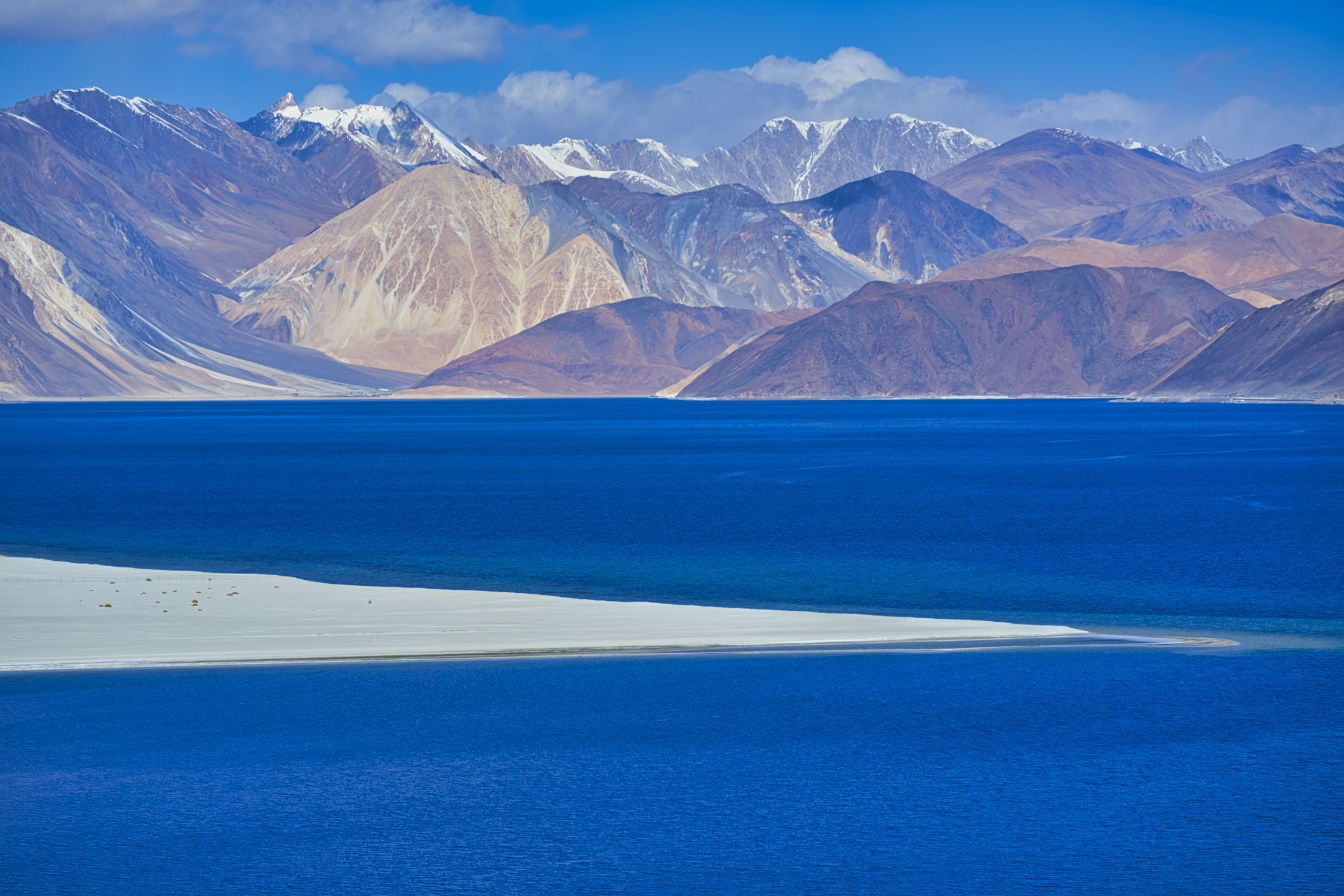
My wife got out first. I watched her walk toward the water, stopping just short of where it met the shore. She stood there. I followed. For several minutes we didn’t speak.
There was almost no one else there. A few houses scattered along the shore at respectful distances. Prayer flags snapping in wind. The mountains on the far side rising in layers—brown, purple, white.
“It’s so close here,” my wife said. “At Spangmik it felt like something to look at. Here it feels like something you’re inside.”
She was right. The difference wasn’t just proximity. It was relationship.
The lake reflected the mountains but imperfectly. The image in the water always slightly off from the reality above. Too bright here. Too dark there. The lake wasn’t trying to mirror the mountains. It was responding to them. Offering its version of what it saw.
I took photographs I knew wouldn’t work. The camera would record shapes but not the particular quality of light at this altitude, not the way the blue seemed to hold depth and surface simultaneously. The ritual felt important anyway. A way of marking that this mattered, even if the marking was inadequate.
Across the road, the mountains rose with a different insistence. Where the lake invited proximity, the mountains demanded distance. Snow clung to their upper reaches in stubborn patches. The rock was striped with time—layers of ancient seabed tilted vertical by continental collision. I’d seen similar geology in Montana, the earth’s history written in stone, readable if you knew the language.
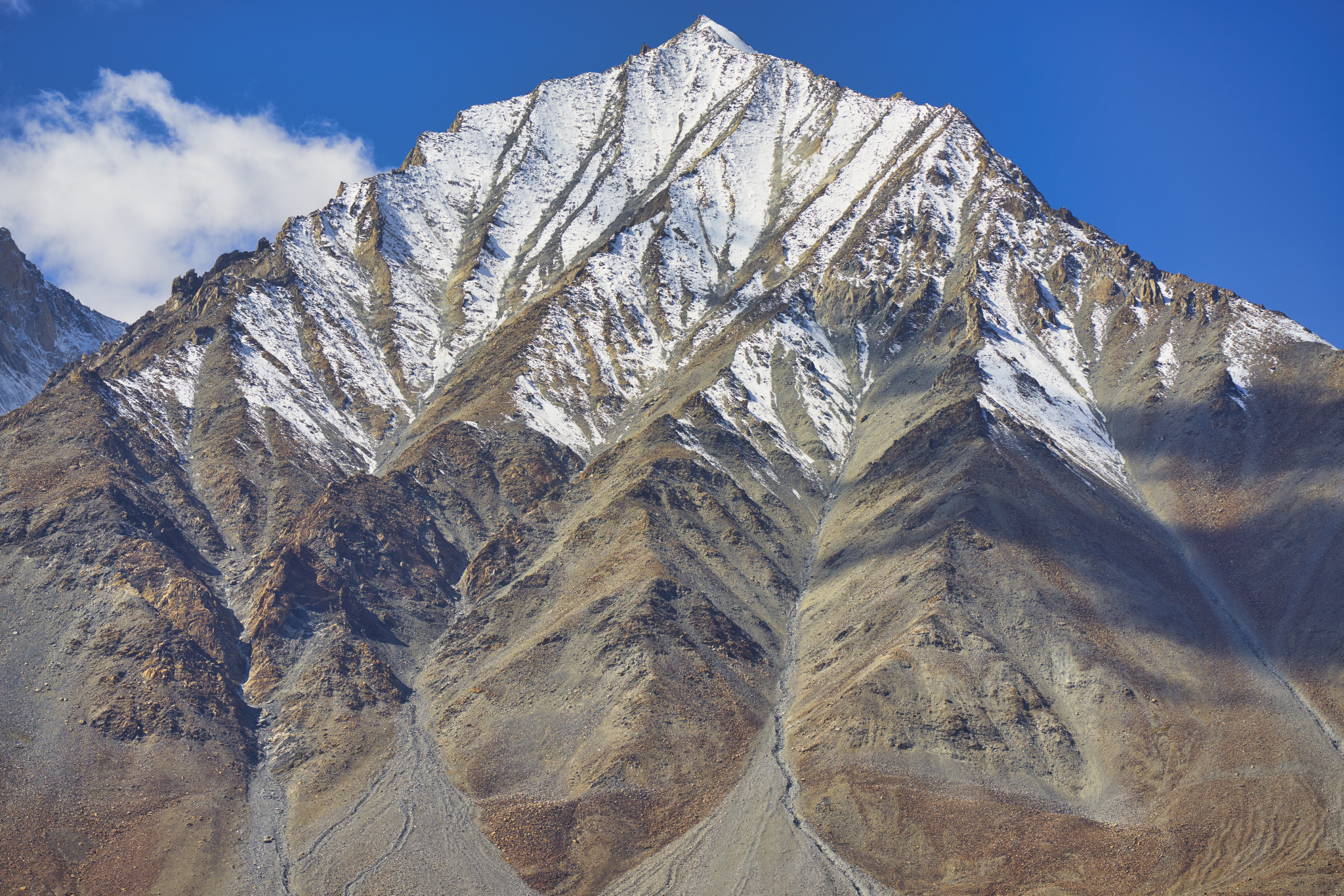
In Montana, I’d wanted to drive toward Glacier’s northern peaks. Toward Canada. I couldn’t. The border stopped me there too.
I’d forgotten that until now.
What the Line Does
We drove further south, following the road as it tracked the lake’s narrowing. My wife was quiet beside me, looking out at the water. The mountains pressed closer on both sides. The lake began to taper. A lake becoming a channel, pointing east.
Toward China.
We came to a place where the road rose slightly. From there we could see how Pangong Tso curved behind the mountains and continued into territory we couldn’t enter. We stopped. Got out. The wind was stronger here, colder, carrying the smell of stone and distance.
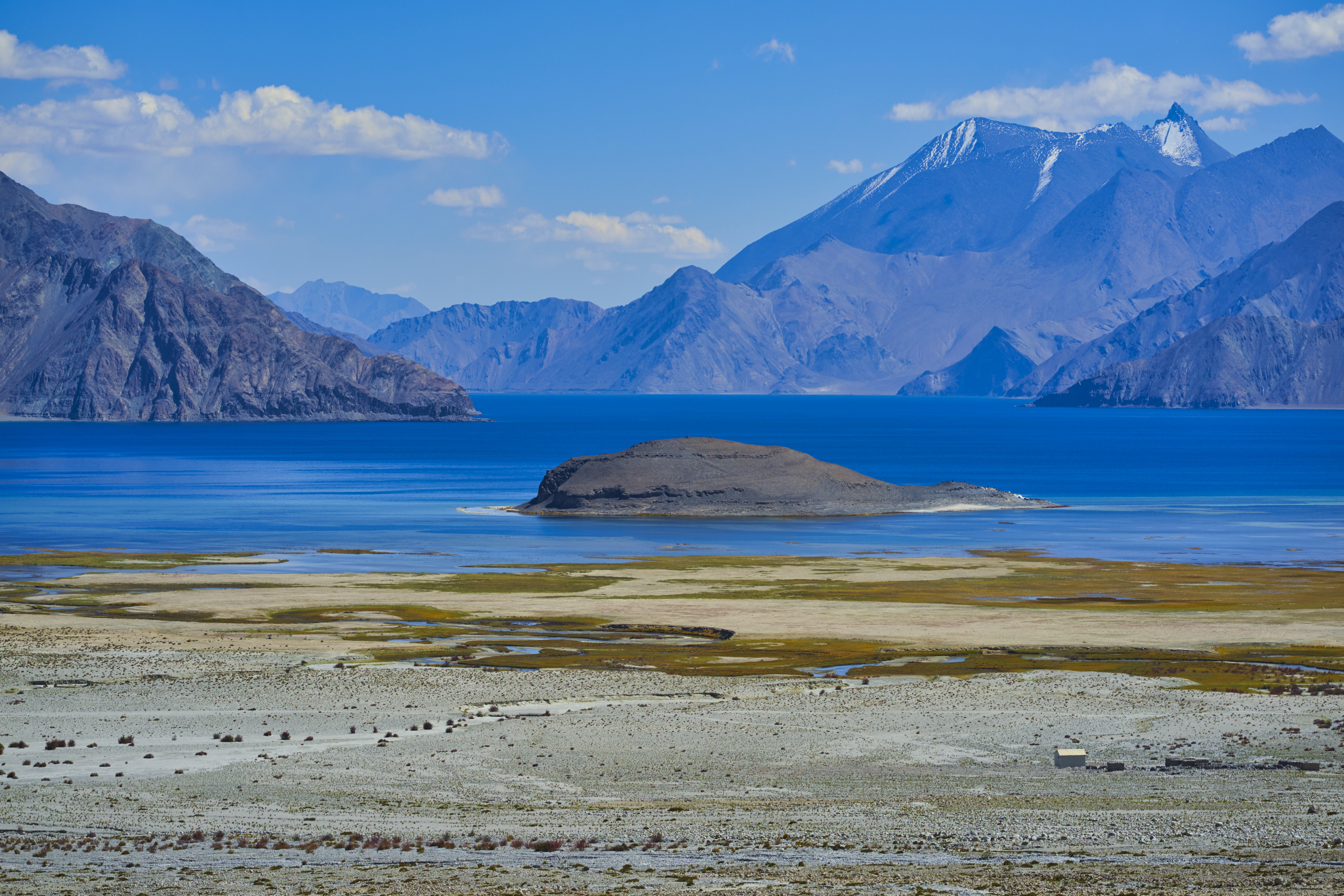
That’s when it hit us—we wouldn’t see the widest part of the lake on this journey. That section that appears in all the photographs, where Pangong Tso spreads out vast and blue between mountains. That part lay ahead. Beyond the border. Beyond checkpoints and permissions. We could see where the lake went. We couldn’t follow.
My wife stood beside me. The silence stretched long enough that I could hear my own breathing, thin at this altitude.
“It’s completely artificial,” she said.
“What is?”
“This. Not being able to go there.” She gestured toward where the lake continued, her hand cutting through air. “The border. We can see it. But we can’t go. Because of a line someone drew.”
I nodded. We looked at water that continued past the point where we were allowed to observe it. The blue unchanged by the prohibition that divided it.
“It limits everything,” she said. “Not just travel. The whole experience of being alive. Of exploring.” She paused. “We could be standing at the widest part right now. But we’re not. Because of something completely artificial.”
Artificial.
The word landed like recognition. Like something I should have known but hadn’t.
I thought about Montana. About Glacier. About standing at the border with Canada, wanting to cross. I didn’t have a visa. I’d driven forty-one hundred miles across seven states. The border was arbitrary—just the 49th parallel, a line agreed upon by governments. The mountains continued across it. The glaciers didn’t stop at it. But I did.
I’d told myself it was fine. I’d seen enough. The American side was sufficient.
But that wasn’t true. I’d wanted to see the other side. To understand the park whole, not halved. To follow the landscape wherever it led. The prohibition had felt minor then. Forgettable. Just bad timing.
Here, with my wife, watching another lake curve away behind another border, I understood differently. It wasn’t bad timing. It was the same thing. The same limitation. The same artificial line cutting through continuity.
“Do you think it’s always been like this?” my wife asked. “Or was there a time when you could just… follow the lake?”
Probably there had been. Before wars, before lines of control, before water became territory to claim rather than something to share.
What I knew directly was this: I was standing at the edge of where I was allowed to be. Again. The landscape continued. I didn’t.
The water was one continuous body. The same molecules that lapped somewhere near my feet continued for miles, crossing a boundary that existed in agreements and enforcement but nowhere in the actual behavior of water. The border ran through the lake. The lake ignored the border.
In Montana, I’d felt small against vastness. That had felt natural. Appropriate. But I hadn’t just felt small against vastness. I’d felt small against prohibition. I just hadn’t had language for it then.
Here, my wife had given me the language.
“I hate that we can’t see the widest part,” she said quietly. “I hate that we came all this way and there’s a part that’s just… forbidden.”
I did too. But more than that, I hated how normal it felt. How we’d accepted before arriving that there would be parts we couldn’t access. As if prohibition was just another feature of landscape. Like altitude. Like weather.
My wife turned away from the view. “We should go,” she said. “Before I get too angry.”
I understood. The frustration was hardening into something less useful. Better to leave while it was still disappointment.
The Leaving
Before we left, I walked back to where the lake came closest to the road. Crouched down. Touched the water.
It was colder than I expected. Cold enough to make my fingers ache immediately, the kind of cold that feels like it’s reaching past skin into bone. I held my hand there for a moment longer than comfortable, as if the pain might help me remember this better than a photograph would.
I dried my hand on my jacket. Stood up. The blue stretched away in both directions—toward where we’d been at Spangmik, toward where we couldn’t go beyond the border. The same blue. The same lake. Only our access to it was divided.
My wife was already by the car, looking one last time at where the lake curved away behind the mountains. I walked to her slowly, trying to fix the view in memory. Knowing even as I did that memory doesn’t preserve things intact. It reconstructs them. Changes them through the act of remembering.
“Do you think people on the other side are looking back?” she asked when I reached her.
“Probably. Same lake. Same barriers.”
She nodded. “Same stupid artificial barriers.”
We got back in the car. Our driver started the engine but didn’t move immediately, perhaps sensing our reluctance. I sat looking at the lake through the windshield. My wife was quiet beside me. The not-wanting-to-leave even though staying was pointless.
Finally we pulled back onto the road. In the rearview mirror, I watched Merak grow smaller. The lake shrinking from proximity to distance. The blue becoming less specific, more like the idea of blue than the actual experience of it.
The road began to climb. Higher passes ahead. Different landscape. The lake disappeared behind a curve in the mountains, and something in my chest tightened at the disappearance. Not grief exactly. Something quieter. The sense of leaving behind something unfinished. Something I’d seen but not completely. Something I’d touched but not held.
The Road Away
The landscape changed as we climbed. The lake’s blue gave way to brown and gold—the high-altitude desert stretching vast and empty. Or not empty. Full of space. The same quality I’d felt in Montana, that sense of land asserting itself, demanding to be recognized as presence rather than absence.
My wife was quiet for a long time. I glanced over occasionally and saw her looking out at the mountains, her expression distant. Thinking something through.
The road stretched ahead, cutting through landscape that looked increasingly like another planet. Mountains stripped to pure geology. No vegetation. No softness. Just rock and sky and the thin air between them.
“How much of the world we don’t get to see,” my wife said finally, breaking the silence. “Not because we can’t afford it. Not because we don’t have time. But because we’re not allowed. Because of lines on maps.”
I nodded.
“It’s like being told you can’t finish a book,” she continued. “You can read this far. But the rest is forbidden. You’ll never know how it ends.”
“Except the book keeps being written. Whether you’re reading it or not.”
“Right.” She turned to look at me. “The widest part exists right now. People are probably standing there. Looking at the same water we were just looking at. But we’ll never see it. Because of something completely artificial.”
The road curved around the base of a mountain, its rock face striped with geological time. Layers of ancient ocean sediment, compressed into stone, tilted vertical by forces that had built these mountains and were still, imperceptibly, building them higher.
“That’s what bothers me most,” my wife said. “Not the restriction itself. But how normal it feels. How we just accepted it. Like it’s natural the world would be divided this way.”
“It’s not natural.”
“No. It’s artificial. But we’ve all forgotten that.”
I thought about Glacier again. About standing at that border with Canada. About how quickly I’d accepted I couldn’t cross. How I’d driven away without questioning it. Without recognizing what was being denied. I’d been alone then, with no one to name what I was feeling. So I’d called it something else. Called it acceptance. Called it the natural limits of my journey.
But it wasn’t natural. It was artificial. The same prohibition, years apart, continents apart. Identical in structure.
I’d needed my wife’s word to see it. To re-see Montana. To understand what I’d experienced without understanding I’d experienced it.
The road passed through landscape so stark it seemed to reject the possibility of life. And yet there was life—small plants clinging to rocks, adapted to extremes that would kill anything less resilient. The road itself was an assertion of human presence in a place that didn’t particularly want human presence. We were visitors here. Temporary. Tolerated but not welcomed.
In the rearview mirror, there was no sign of the lake anymore. Just mountains and more mountains, layered into distance. Pangong Tso was behind us now, receding into the geography of memory. Already I was forgetting the exact shade of blue. Already the experience was becoming story—something to tell others, something to write about. The cold of the water on my fingers, the sound of prayer flags in wind, the precise quality of light on the lake’s surface—all of it was being translated into language, which meant being changed. Made portable. Made shareable. But also made less than it had been when it was just experience, wordless and direct.
What Remains
I’m writing this weeks after leaving Merak. Trying to reconstruct what I saw and felt from photographs that don’t capture it and memories already shaped by retrospection.
The image that keeps returning is not the lake itself, but the moment of leaving it. Watching it shrink in the rearview mirror. That specific grief of departure—not just from Pangong Tso, but from the possibility of seeing it whole. Of following it wherever it led.
And my wife’s word: artificial.
That word has lodged in my understanding. Changed how I remember Montana. Changed how I remember every border I’ve encountered. Made visible what I’d learned to not see.
The widest part of Pangong Tso is still there. Still blue. Still reflecting mountains. People stand at its edges. Probably Chinese tourists, maybe Tibetan villagers, definitely soldiers stationed at checkpoints. All of them looking at the same water I was looking at. Just from the other side of a line that exists in agreements and enforcement but nowhere in the actual geography of water.
We’re on opposite sides of an artificial division. Looking at the same lake. Prevented from discovering our similarity by the very prohibition that makes us similar. Both standing at edges. Both denied passage. Both feeling, perhaps, the same ache.
In Montana, I’d felt that ache without naming it. I’d called it insignificance. Called it the natural limits of my scale against geological time. But that wasn’t the whole truth. The mountains at Glacier made me feel small. The border made me feel stopped. Two different things. I’d conflated them. Let one hide the other.
At Merak, with my wife, the ache was undisguised. Not about what the landscape denied. About what humans denied on the landscape’s behalf.
And here’s what I learned: borders stop being restrictions and become geography. They stop feeling imposed and start feeling inherent. Natural. The shape of the possible. We internalize them so completely that we forget they’re artificial. Forget that they’re maintained by choice. That they could be otherwise.
My wife saw that clearly. Said it precisely. And in saying it, gave me the language to re-see everything I’d experienced before.
I don’t know how to end this because the experience doesn’t have an ending. The lake is still there, curving behind mountains toward territory I couldn’t enter. The border is still there, maintained by governments and enforced by soldiers. The widest part of Pangong Tso still exists, blue and vast, witnessed by people on the other side of prohibitions I’m not allowed to cross.
Nothing has resolved. Nothing has changed.
Except this: I can no longer pretend the divisions are natural. Can no longer accept them as just the way things are. My wife’s word has become a lens I can’t remove. Every border I encounter now carries that word.
Artificial. Made by humans. Maintained by choice. Real in consequences but not in nature.
And if artificial, then revocable. Not easily. Not soon. Maybe not in my lifetime. But potentially. In some version of tomorrow that requires more political courage and less territorial insistence than the present seems capable of.
Until then, the lake curves toward China. Blue and indifferent and continuous.
I stood at Merak long enough to watch it disappear behind mountains. Long enough to touch the cold water and let the cold reach past skin into bone. Long enough to feel the loss—not just of what I couldn’t see, but of what I was leaving behind. Long enough to hear my wife name what we were feeling with precision I hadn’t managed alone. Or in Montana. Or anywhere else I’d been stopped by lines I’d learned to call something other than what they were.
We followed the road away because we had to. The border made staying impossible and crossing prohibited. We climbed higher into landscape stripped to fundamentals—rock and sky and the thin space between them. We carried the image of blue water shrinking in the rearview mirror. Carried my wife’s observation. Carried the understanding that most of what we’d seen was defined by what we weren’t allowed to see.
And I carry it still. Not just the memory of Pangong Tso, but the memory of leaving it. Of watching it recede. Of that specific moment when proximity became distance, when experience became memory, when the lake I’d touched with my own hand became the lake I could only imagine from far away.
In Montana, I learned what it felt like to be stopped. I just called it something else. Called it the end of my journey, as if journeys have natural ends rather than artificial ones.
At Merak, with my wife, I learned what it felt like to name being stopped correctly. To recognize it not as the natural limit of exploration but as the imposed limit of prohibition.
The landscapes were similar. The prohibition was identical. The difference was language. Having the word. Finally. After years of standing at borders and calling them something other than what they were.
Artificial.
The lake doesn’t care about borders. The mountains don’t acknowledge them. Only humans do.
And maybe that’s what I learned at Merak, in the leaving as much as in the seeing: that the divisions we treat as geography are actually agreements. Temporary. Revocable. Maintained by choice rather than necessity.
And that sometimes it takes standing at the same prohibition twice—years apart, continents apart—to recognize you’ve been here before. Not in landscape. In experience.
Stopped by lines humans drew.
Calling it something else.
Until someone gives you the word that makes you see.
Until the moment of leaving makes you feel what staying couldn’t teach you: that loss and prohibition are not the same thing. That one is natural and the other is artificial. That missing something because you had to leave is different from missing something because you were never allowed to arrive.
I left Pangong Tso behind. Watched it shrink and disappear in the rearview mirror. Felt the grief of departure.
But the widest part—I never left that behind. Because I was never allowed to reach it in the first place.