There was a lake before Tso Moriri. Small, nameless to us, cradled at the base of mountains that had not yet earned our attention. My wife asked why I wasn’t photographing it.
“Some things are only for the mind,” I said.
It was a lie dressed as philosophy. The truth was simpler and less poetic: I was tired. Tired of beauty. Tired of the weight of seeing, which is different from the weight of looking. Tired of trying to hold light in a machine—heavier than either.
We had come from Hanle, from darkness thick with stars, from a sky so full it had made absence visible. And now this—another body of water, another arrangement of stone and light, another moment demanding witness. The fatigue wasn’t physical, though altitude made breathing feel like labor. It was something deeper. The exhaustion that comes from too much wonder compressed into too little time.
So I let the small lake pass. Carried it only in memory, which proved lighter than carrying it in pixels.
But when we reached Tso Moriri, all that fatigue fell away like a coat I’d forgotten I was wearing.
Or so I told myself. I’m not sure anymore it was that simple.
The First Seeing
The lake appeared gradually, the way important things often do—not announced, just increasingly present until you realize it’s been there longer than you’ve been looking.
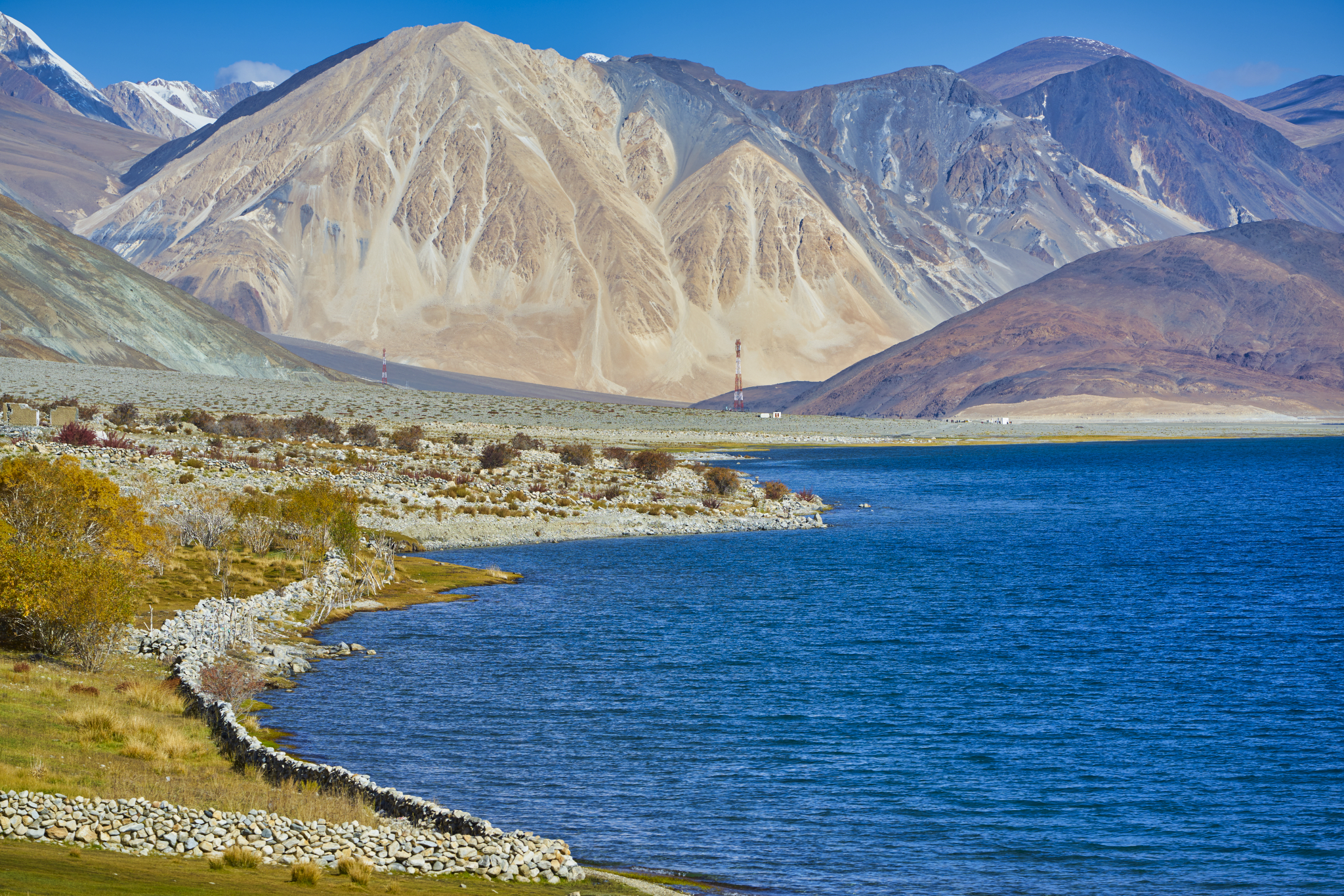
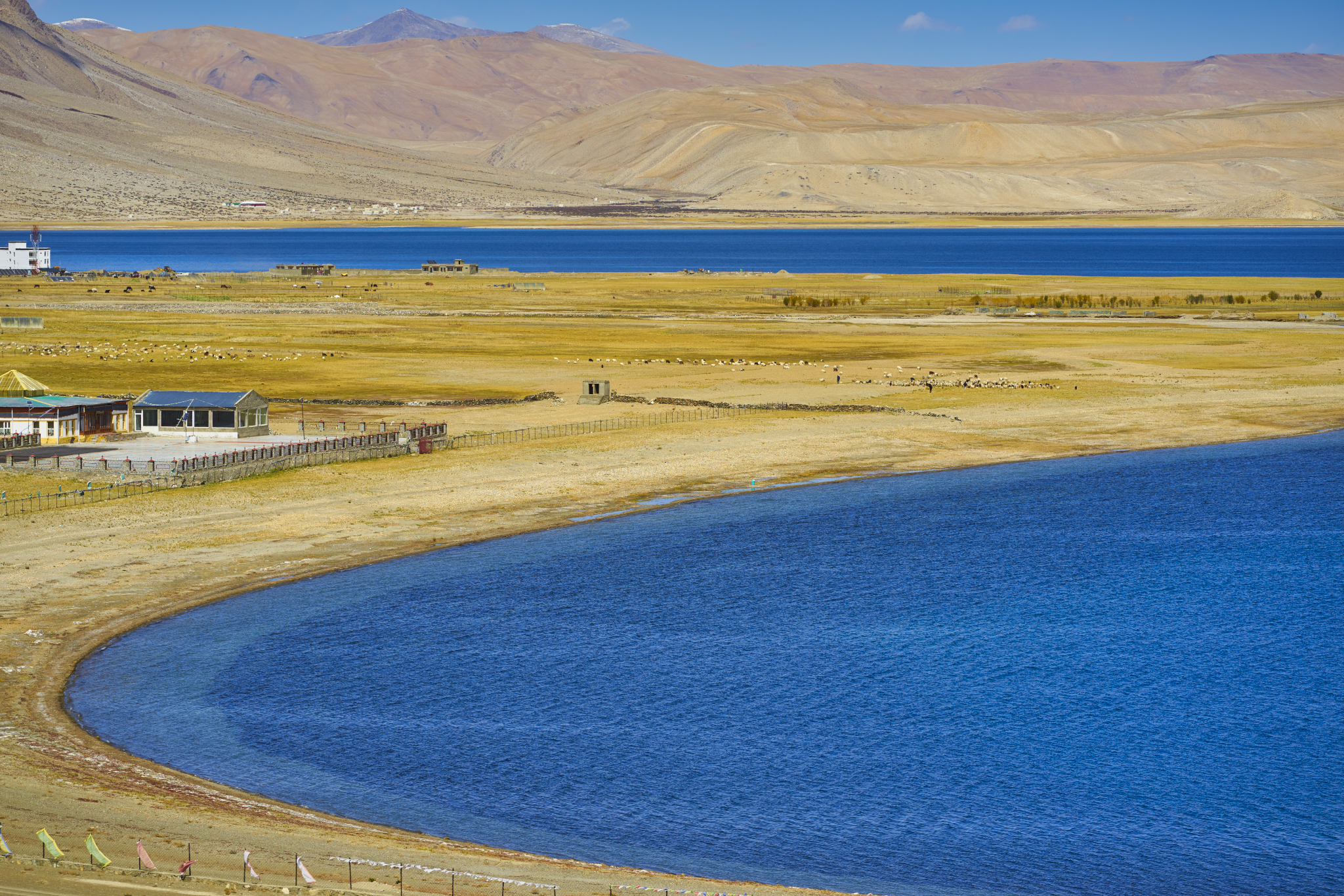
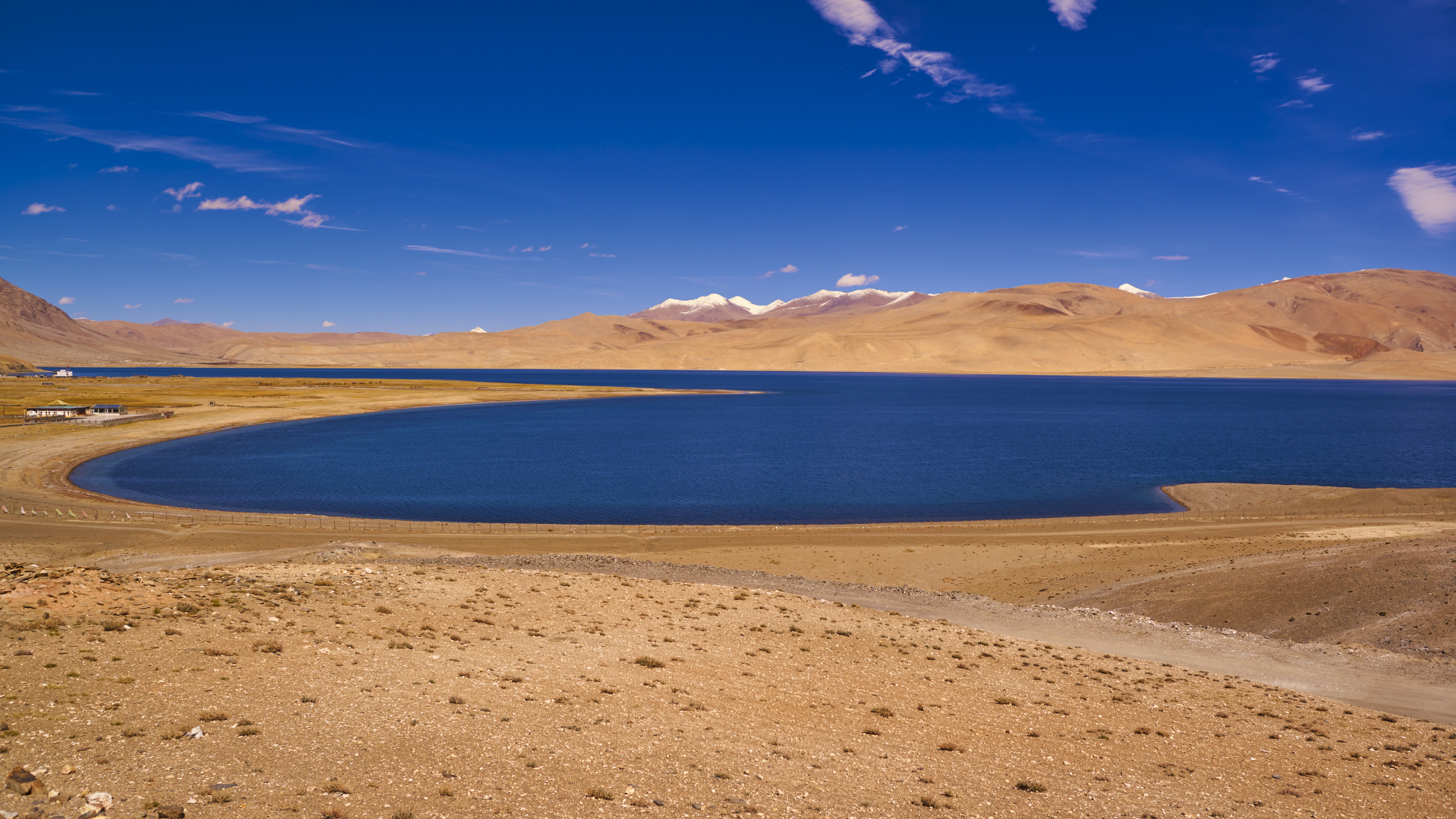
Blue. Impossibly blue against brown mountains and sand that climbed their slopes like it had forgotten it wasn’t meant to be there. The water held that particular shade that has no name because it exists nowhere else—neither turquoise nor navy nor cobalt but some combination that happens only at this altitude, only in this light, only when minerals and depth and angle arrange themselves precisely.
We stopped. Got out. The wind came immediately—not hostile, just persistent, reminding us we were visitors to a place that had been having this conversation with itself long before we arrived.
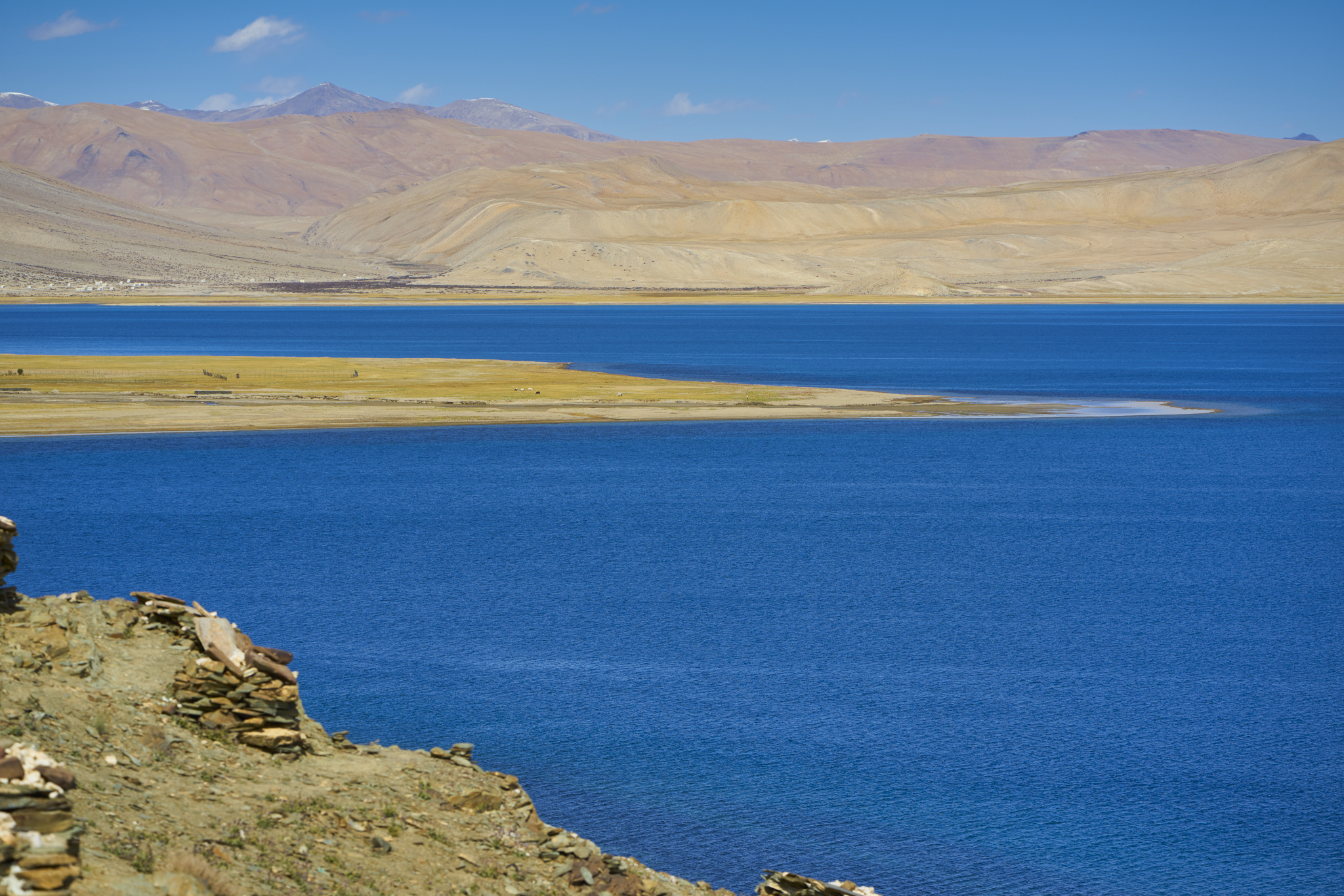
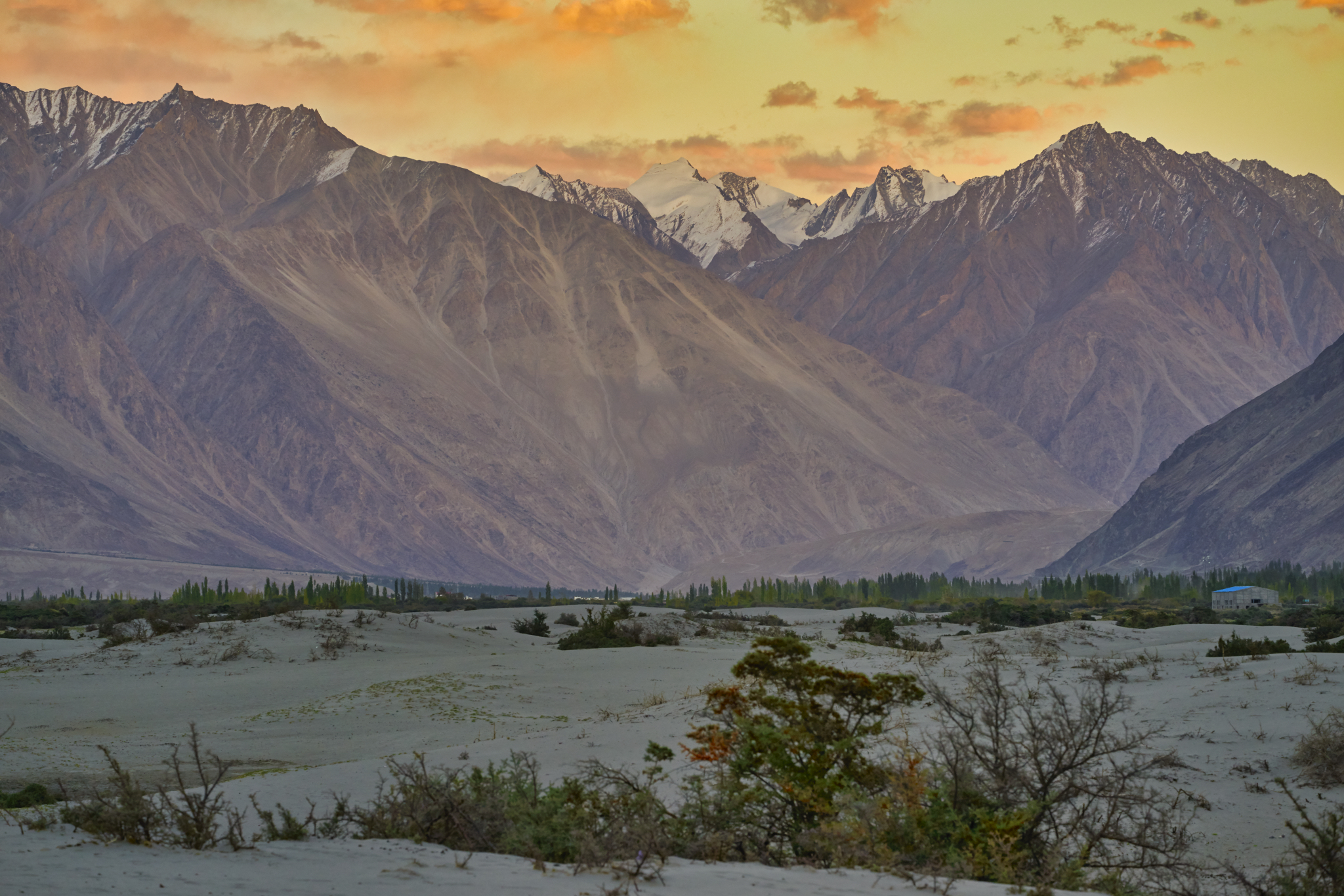
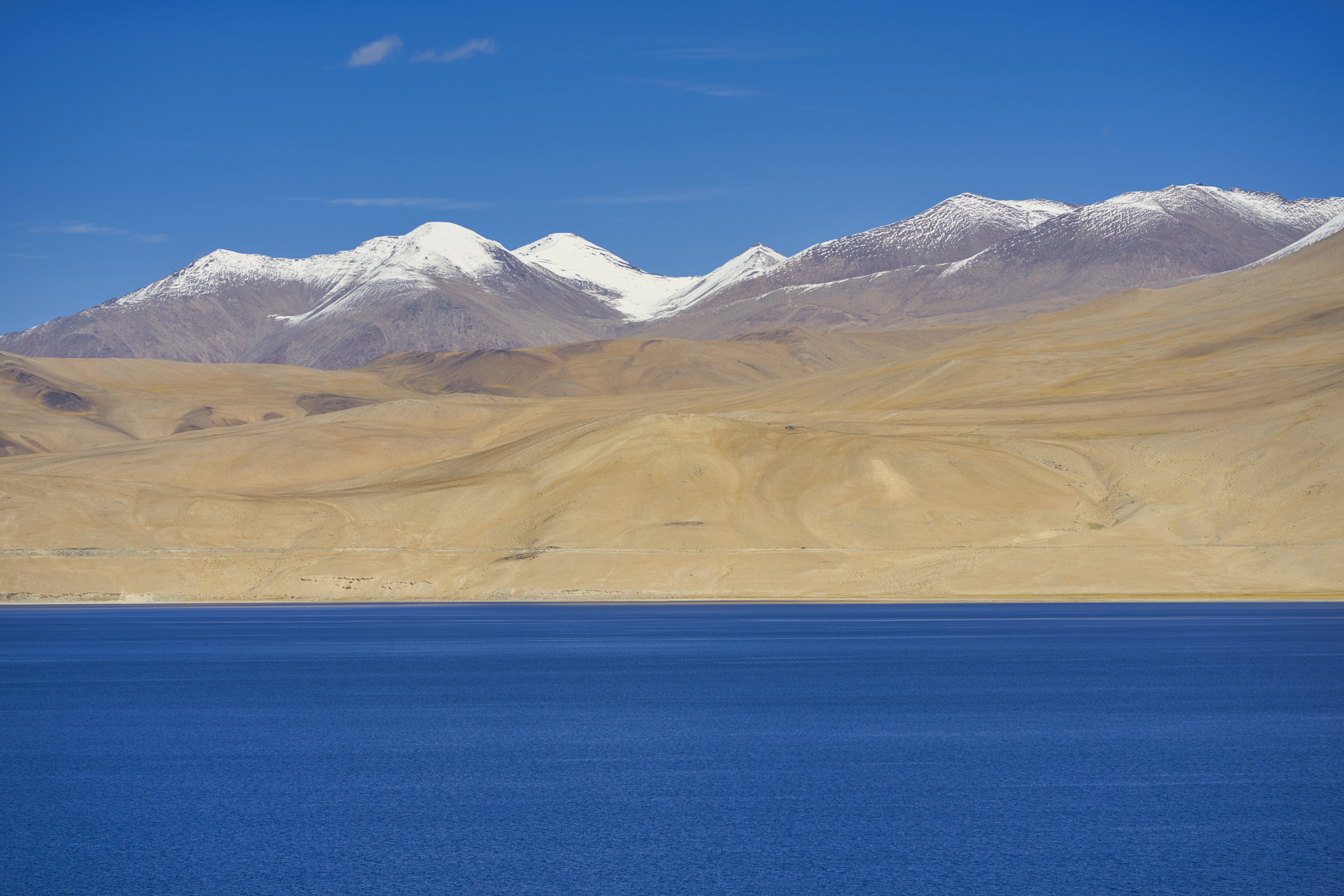
The mountains rose in layers. Some close enough to see their striations, the geology written in horizontal lines like sentences in a language I couldn’t read. Others distant, snow-capped, standing against sky so blue it looked painted by someone who’d never seen real sky and had to imagine what blue meant when it went all the way up.
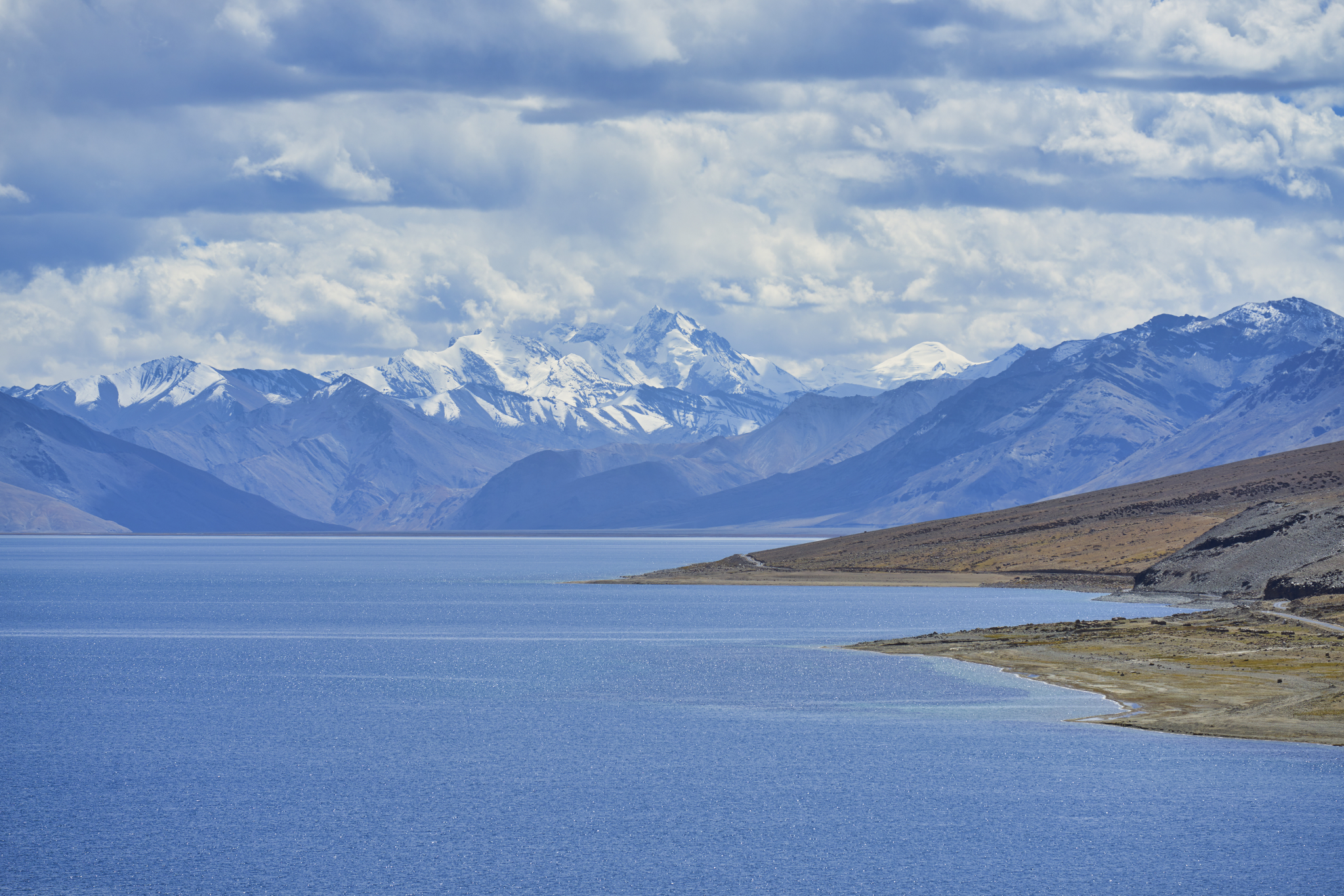
Between them, that band of sand—gold and amber climbing halfway before giving up, meeting snow that refused to descend any lower. Desert and winter on the same slope. Another of Ladakh’s casual impossibilities.

I raised the camera. The fatigue hadn’t returned.
But something else had. Something I’m less comfortable admitting.
What I Was Actually Doing
Here’s what I tell people: I photograph to preserve moments. To hold beauty. To bear witness to landscapes that existed long before me and will persist long after.
Here’s what’s truer: I photograph to prove I was there. To create evidence of my own attention. To build a catalog of moments that say—look, I saw this, I was present, I mattered.
The small lake I’d let pass—that was honest. That was actually seeing something without needing to own it, without needing proof it had happened.
Instead I arrived at Tso Moriri and immediately began the work of turning experience into possession. Frame after frame. Not trying to hold what I felt, but trying to hold that I felt. Trying to capture not the lake but my own capacity to be moved by it.
What Light Does at This Hour
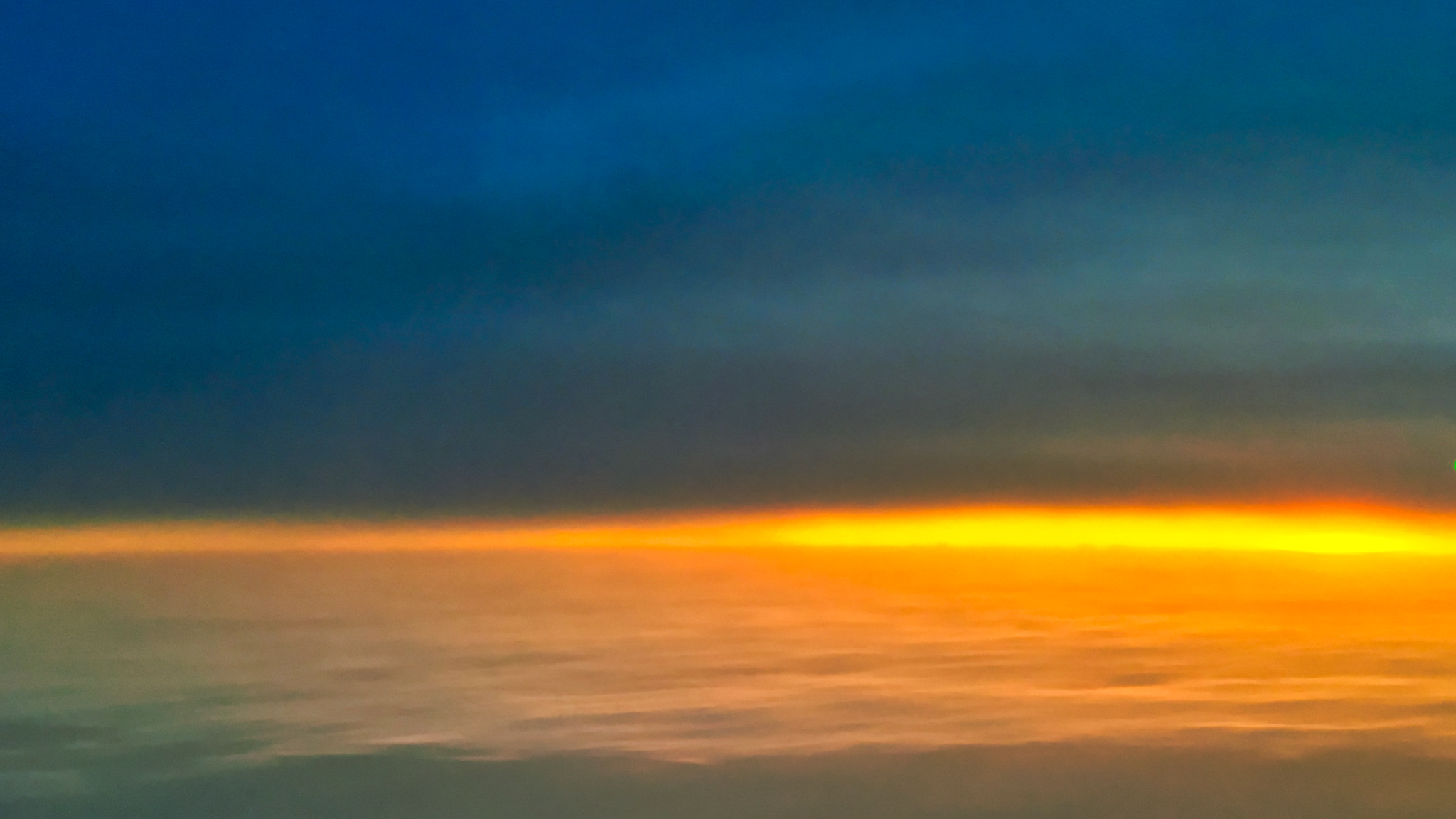
Golden hour arrived not as a single moment but as a slow transformation. The mountains began to glow—brown becoming amber, then rust, then bronze. The shadows deepened and lengthened, and suddenly every ridge, every fold in the rock became distinct.
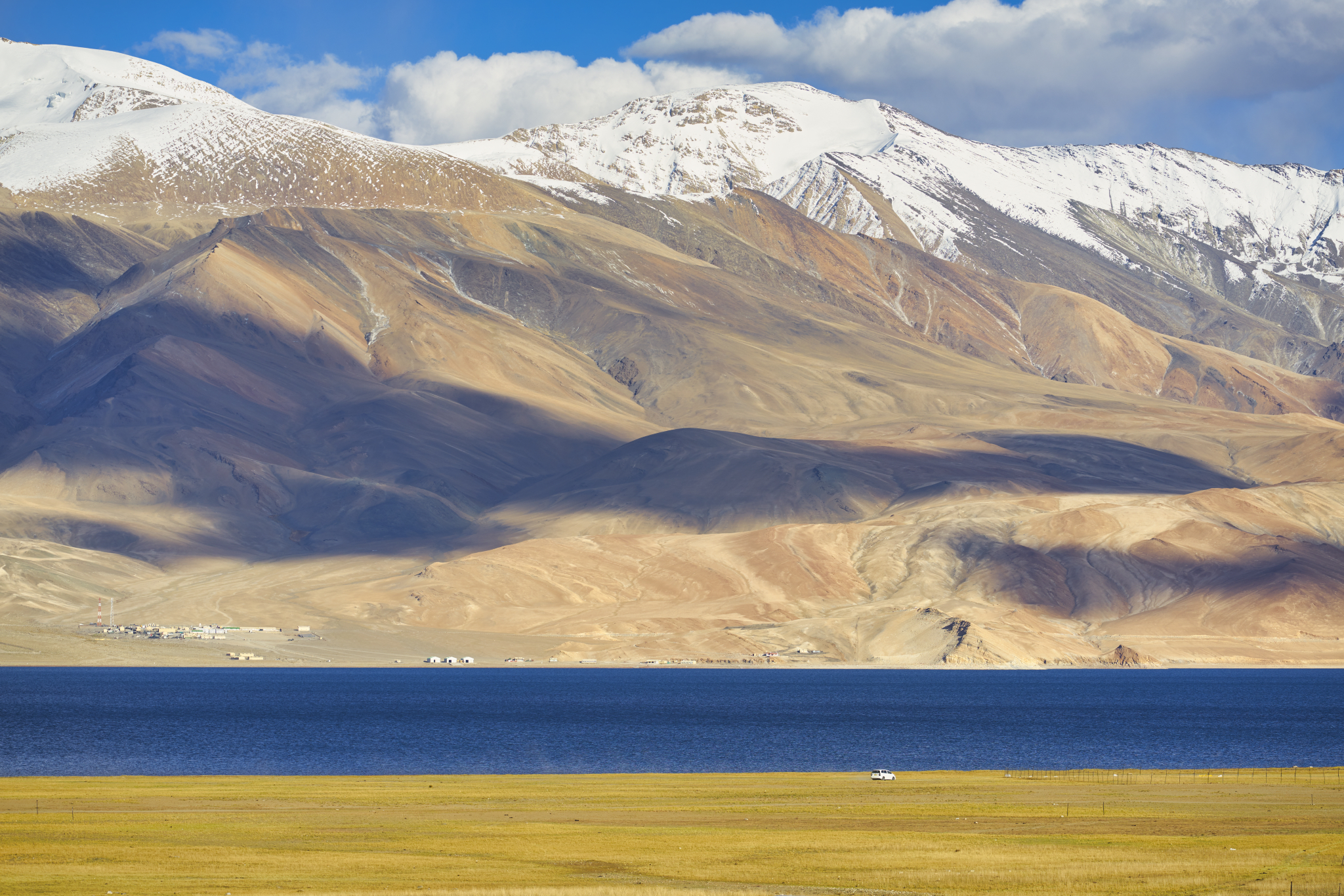
It was the most beautiful thing I’d seen in days.
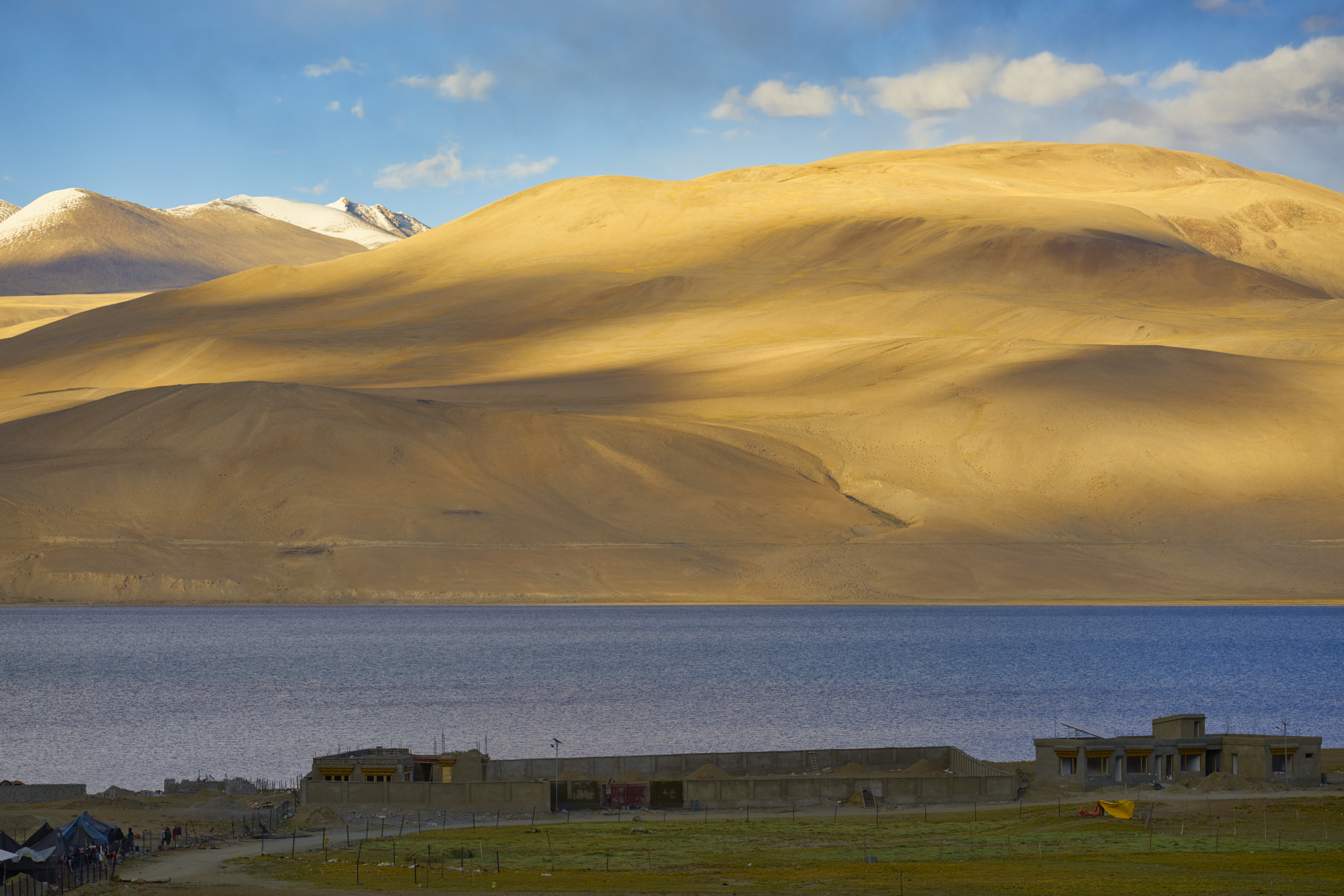
I missed it.
Not because I wasn’t there. I was there, eye pressed to viewfinder, adjusting exposure, checking histogram. Doing everything right technically. But I wasn’t seeing the light leaving. I was seeing my photograph of it. Already editing in my mind, already in the future.
The camera became what it always becomes: a barrier disguised as a bridge.
My wife stood beside me. She wasn’t photographing. Just standing there, wind in her hair, watching light leave the world.
She glanced at me once. A look I couldn’t quite read—not judgment, not concern, just… noticing. Then turned back to the mountains.
I envied her. And kept shooting.
The Structures Across the Water
Small buildings dotted the far shore. White rectangles against the mountain’s base, arranged with institutional geometry. Military outpost, maybe. Administrative station. Border patrol in a place where borders mean everything and nothing.
I photographed them—tiny against the landscape’s scale, dwarfed by mountains that made even their function seem temporary.
There seemed no way to reach them. No road visible from where we stood. No boats on the water. Just those structures, isolated, watching the lake from the other side.
I kept shooting anyway. Using their isolation to give my frames scale and narrative. Using their unknowability to add mystery to compositions that needed something beyond just water and mountain and light.
Using them the way I’ve used every landscape I’ve ever pointed a lens at—extracting what I need, moving on.
What Couldn’t Be Held
The camera captured the light, the composition, the precise arrangement of elements that made each frame work or fail.
What it couldn’t capture: the experience of standing there. The thing itself, before it becomes story or photograph or essay.
The Grazing Lands
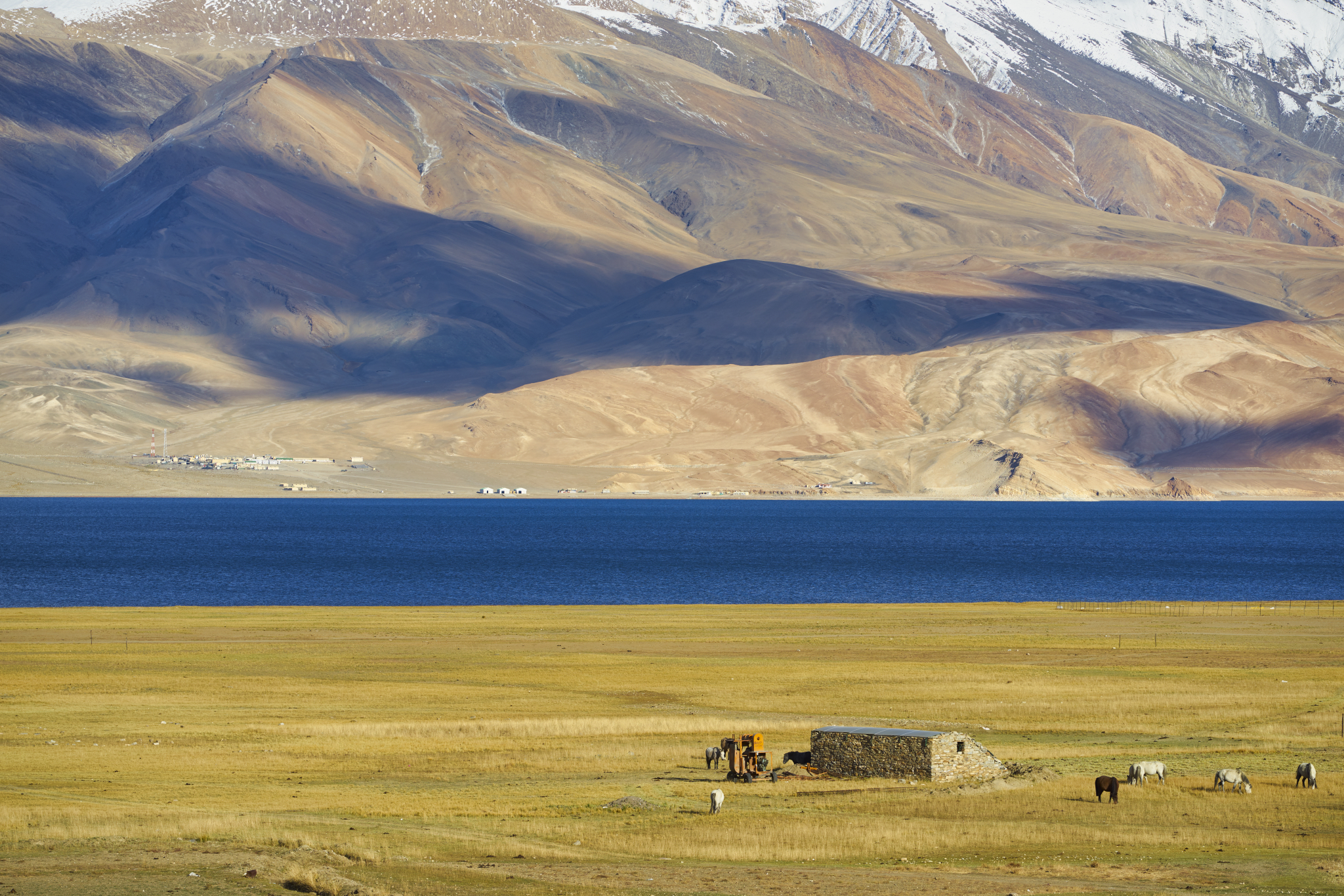
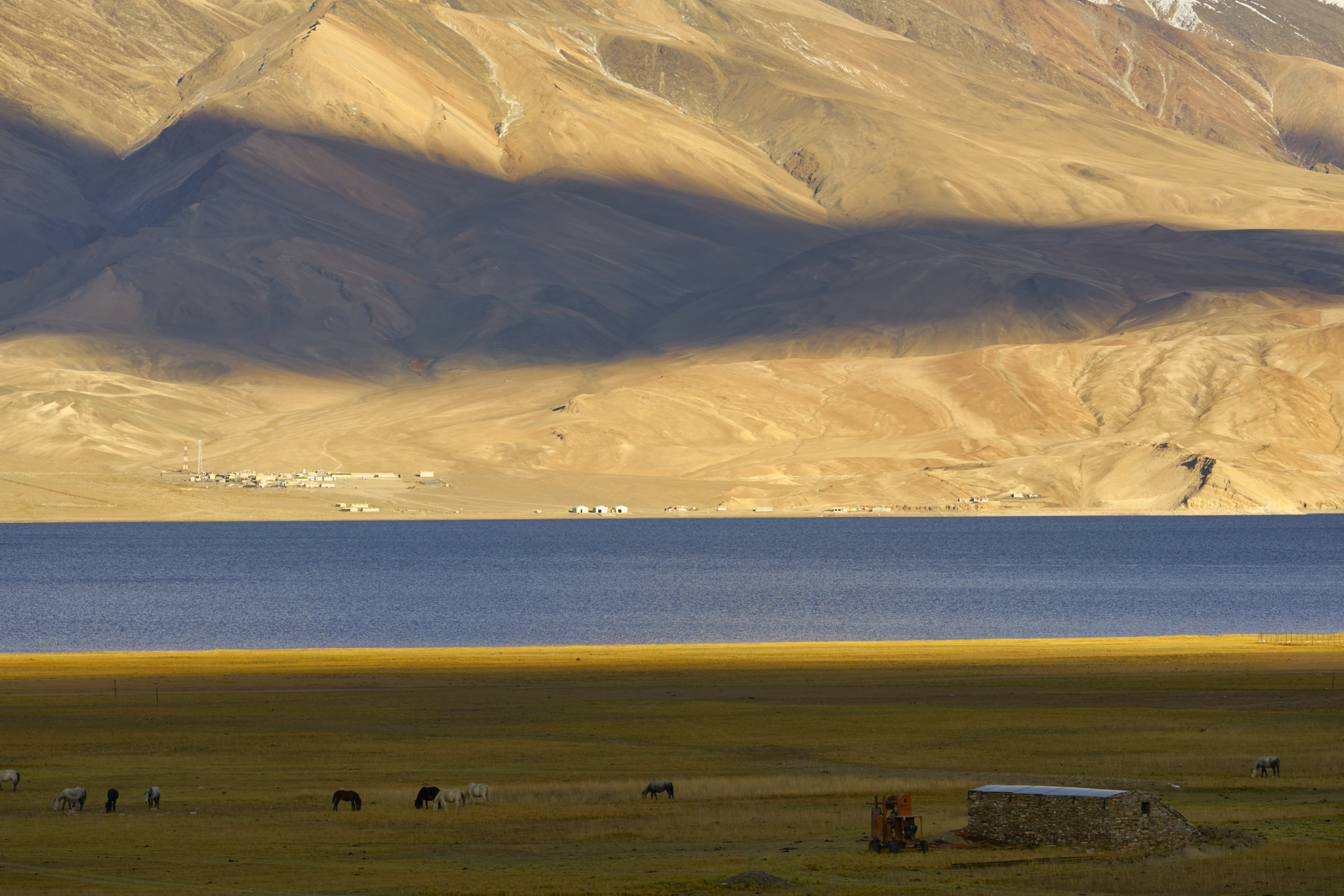
In some frames, the shore turned gold—not sand, but grass. Short, tough vegetation that survived despite altitude and cold and wind that never stopped. Animals grazed there—horses, I think, though distance made certainty impossible.
This band of gold against the water’s blue created a composition too perfect, too balanced. But it wasn’t arranged. It was just what happened when water found soil, when soil found light, when animals found both.
A stone structure sat near the shore. Simple. Functional. It looked like it had grown from the ground rather than been built on it.
I shot it all. The golden grass, the blue water, the distant animals. And in each frame, those mountains—rising, folding, holding snow and sand in equal measure.
What Changed
Nothing changed.
That’s the hard part to admit. I want to tell you that Tso Moriri transformed me, that the beauty broke through my fatigue and reminded me why I started doing this. I want the arc to be clean: tired, renewed, grateful.
But that’s not what happened.
What happened is I stood at the edge of extraordinary beauty and immediately began the work of processing it into photographs. I reduced an experience to a file format. I turned presence into evidence. I did what I always do.
The fatigue didn’t fall away. It just shifted. From the fatigue of too much beauty to the fatigue of knowing I’m constitutionally incapable of experiencing beauty without this mediating layer, this camera between me and the world, this constant documentation of attention rather than attention itself.
The light faded. The mountains released their stored brilliance. The lake darkened. I kept shooting until I couldn’t anymore, until the light was gone and there was nothing left to capture.
The Small Lake Reconsidered
I think about that first lake constantly.
The one I didn’t photograph. The one my wife noticed and I dismissed with a line about memory being enough.
I was accidentally right for the wrong reasons. I didn’t choose to see that lake purely. I was just too tired to do the work of capturing it. And in that tiredness, in that surrender, I actually saw it. I was actually there.
At Tso Moriri, I chose differently. I chose the camera. I chose documentation over experience. I chose proof over presence.
And now I have the photographs. Hundreds of them. Evidence that I was there, that I saw this, that I bore witness.
But I’m not sure I was there at all. Not really. Not the way I was at that small lake I can’t name, can’t locate on a map, can’t prove existed.
That lake I actually saw. Tso Moriri I only photographed.
Here’s what’s hardest to admit: I need the photographs. Not to remember—memory would be enough, if I trusted it. But to prove. The photographs are how I know I matter.
Maybe the person who saw that small lake and let it go actually experienced something. Maybe the person who stands at Tso Moriri with a camera is just performing experience.
I can’t prove I was at the small lake. But I know it’s true.
At Tso Moriri, I can prove everything. I have hundreds of frames of evidence.
But I’m not sure I was there at all.
What Persists
The mountains are still there. The lake still holds its impossible blue. The sand still climbs slopes it has no business climbing. The wind still speaks to itself in that language we can almost understand but never quite translate.
And somewhere in my files, in frames I took that evening, all of it persists. Documented. Catalogued. Processed. Evidence that I was there.
But here’s what’s also true, what I keep forgetting in all this self-accusation:
I was there. Despite the camera. Despite the mediation. Despite spending the golden hour with my eye pressed to a viewfinder instead of simply watching light leave the world.
I felt the wind. I tasted the altitude. I stood beside my wife at the edge of that impossible blue and something happened that the photographs can’t hold but also can’t erase. The cold found every gap in my clothing. My fingers went numb adjusting settings. And beneath all of that—beneath the documentation, beneath the performance, beneath the need to prove—I was standing at Tso Moriri as mountains held snow and sand in equal measure, as light left the world, as water reflected sky.
Maybe both things are true. Maybe I was there and not there. Maybe the camera took something and also gave me a reason to stand still long enough for the place to work on me in ways I’m only beginning to understand.
The small lake exists only in memory—unmediated, pure, unprovable.
Tso Moriri exists in photographs and in memory both.
I need both. The seeing and the holding. The presence and the proof. Even if they’re in constant tension. Even if I’ll never resolve it.
That’s the trade. That’s what the camera costs. That’s what I keep paying, frame after frame, lake after lake, year after year.
And I still haven’t decided if it’s worth it.