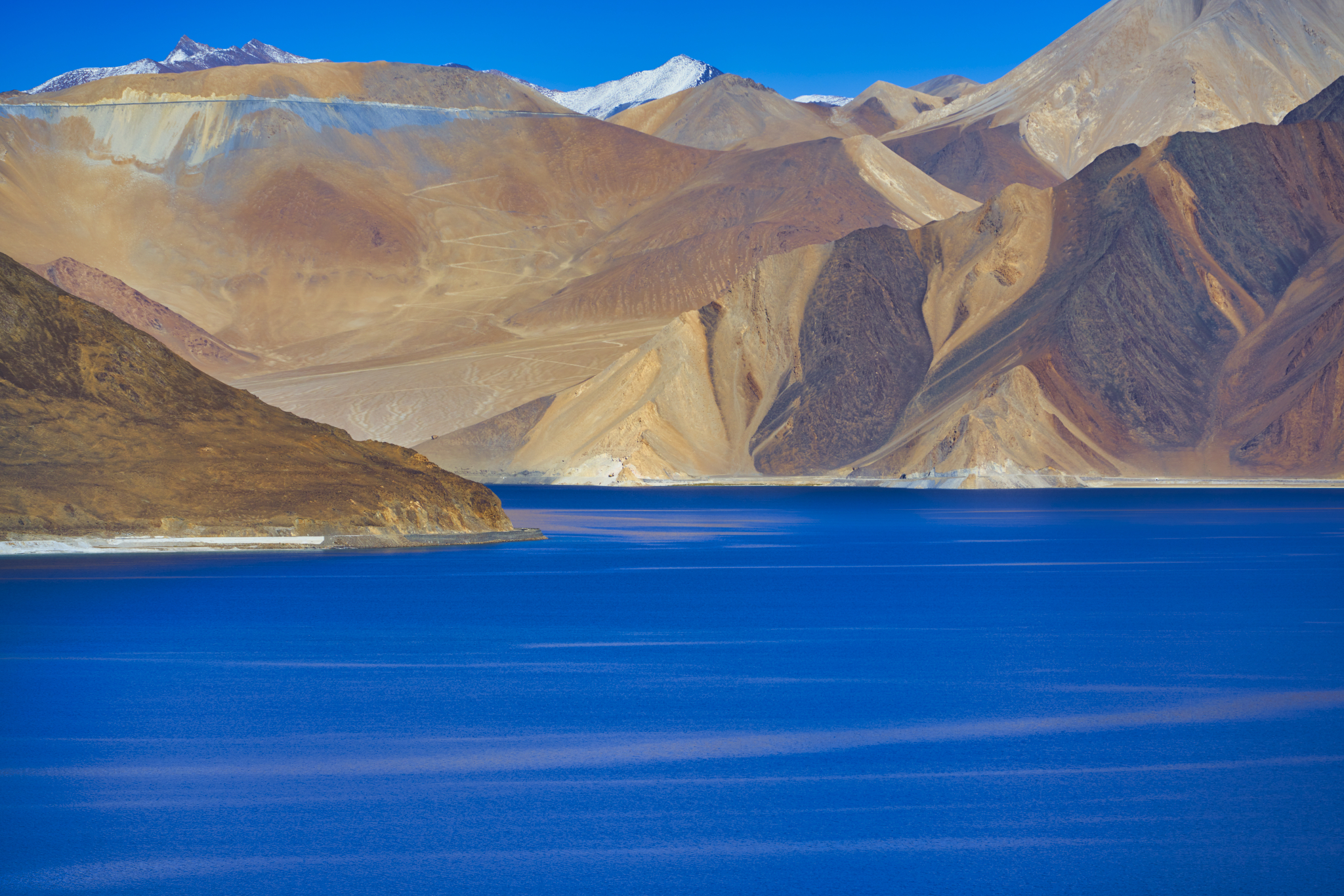
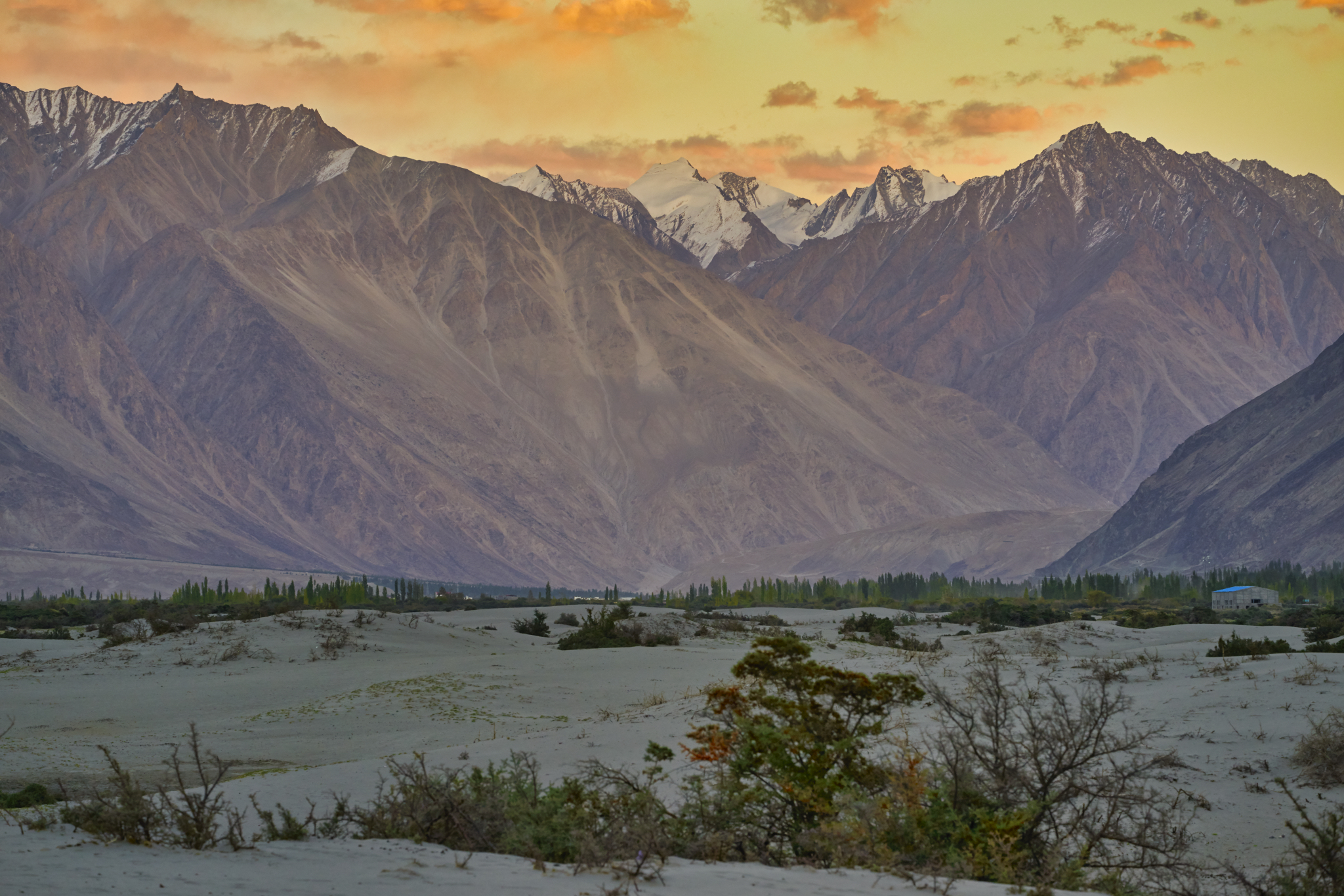
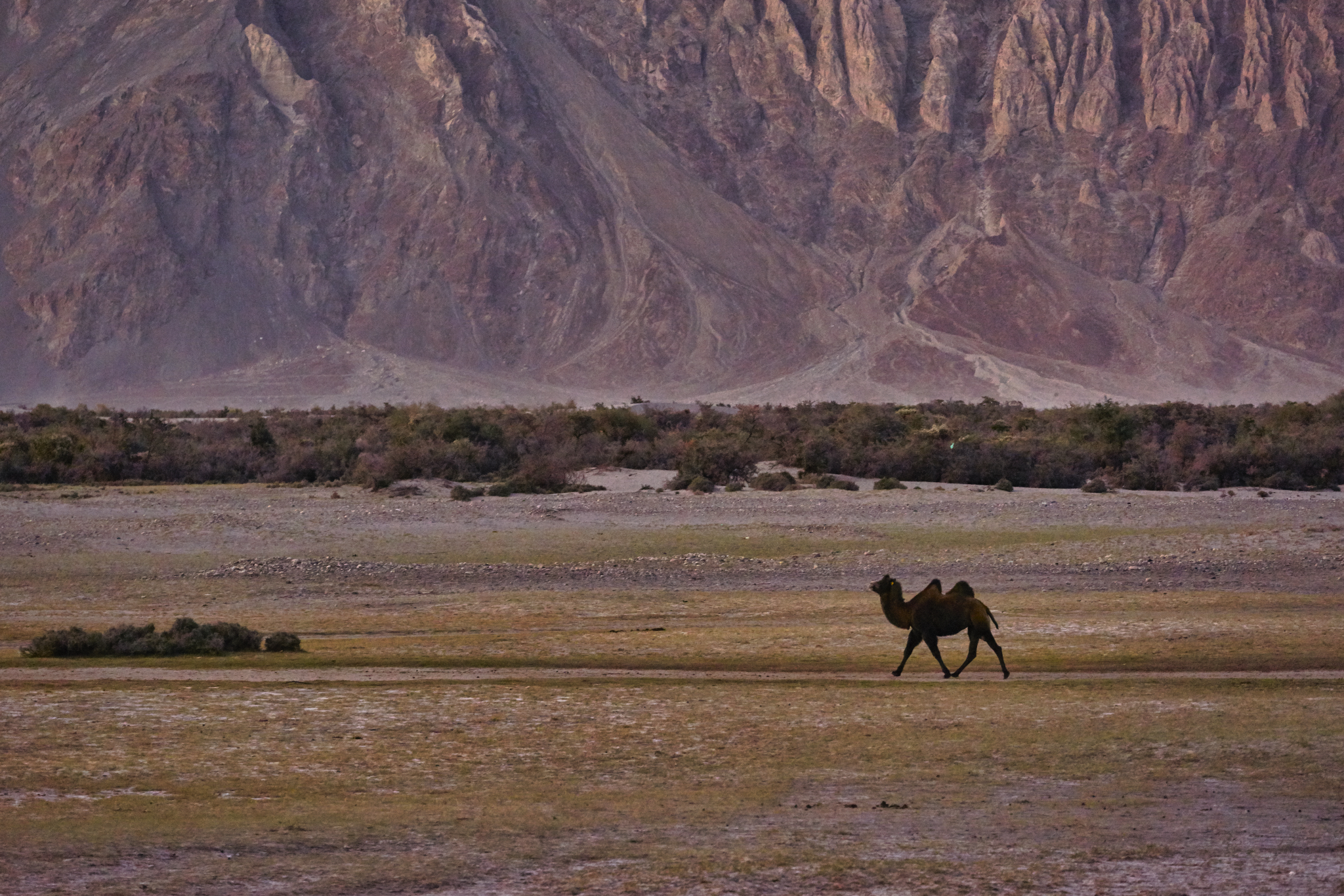
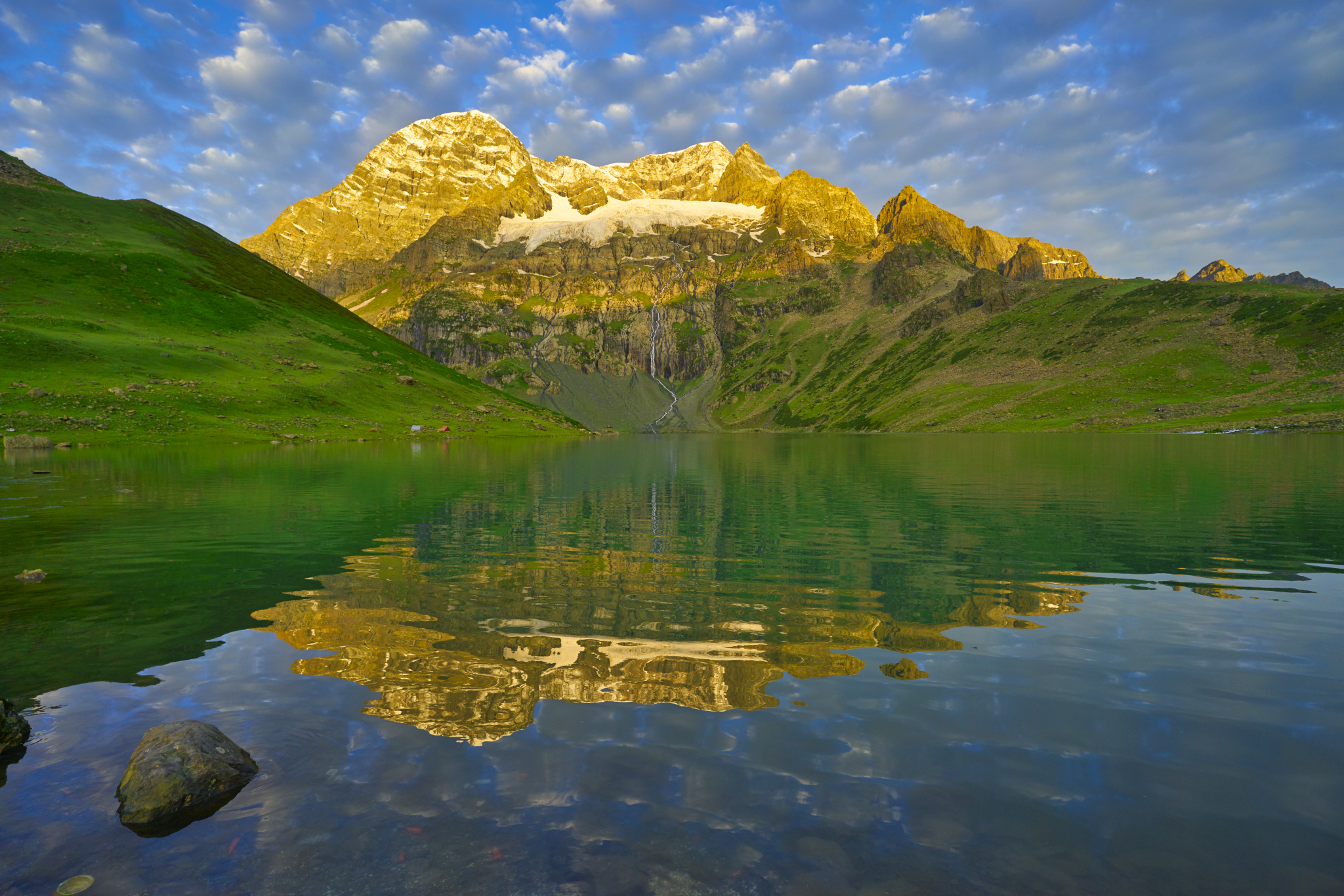
The blue is wrong.
That’s my first thought at Pangong Tso, standing at 14,270 feet with lungs that still haven’t forgiven me for the last six hours. The blue is too saturated, too insistent, like someone adjusted reality’s contrast settings without permission. My eyes don’t trust it. After everything—after Wari La and Chang La and the nausea that comes with altitude and the peculiar tedium of switchbacks that seem designed to test patience more than vehicles—this feels like a hallucination. Like my oxygen-starved brain has conjured compensation for the ordeal.
But it’s real. The lake is real. And I’m standing here trying to remember why we came this way, trying to reconstruct the logic of a journey that, in retrospect, has no logic at all.
The Route We Didn’t Choose
The easier road was closed. That’s the entire explanation, though I keep wanting it to mean something more. We didn’t choose the difficult route through principle or adventure—we took it because the alternative didn’t exist. Nubra to Pangong via Shyok would have been simpler. Lower. Kinder to bodies that were already negotiating with altitude after days in Ladakh.
Instead: Nubra to Agham to Sakti to Wari La to Chang La to here. Two passes over 17,000 feet. Two climbs where breathing becomes a task you have to remember to do.
I want to say we were heroic. We weren’t. We were simply people in a vehicle, following a road because it was the only road available. There’s no valor in necessity.
Fragment: The First Switchback at Wari La
My hand is gripping the door handle though I don’t remember deciding to grip it. We’re maybe twenty minutes into the climb toward Wari La and already I can feel the air changing—not dramatically, not all at once, but in increments my body registers before my mind does.
The driver is silent. Has been silent since we left. I wonder if he’s bored—if this route, terrifying to me, is just Sunday for him. Probably. Almost certainly. But I project competence onto his silence because I need to believe someone here knows what they’re doing.
The road drops away on the right. Not metaphorically. Actually drops. I can see down to where the valley floor waits, patient and indifferent, several hundred meters below. I think about the word “precarious” and how it fails to capture what I’m feeling, which is less fear than a kind of exhausted acceptance. If we go over, we go over. My grip on the door handle won’t change that outcome.
This is the part of travel writing I usually skip: the boring terror. The way fear becomes tedious after the first twenty minutes, becomes just another thing you’re managing alongside hunger and the need to pee and the grit in your teeth from dust that somehow gets everywhere despite the windows being closed.
The Color of Pangong Tso (Still Trying to Understand It)
I’m back at the lake now—in present tense, in actual time—and the blue hasn’t resolved into something believable. It’s worse up close. More impossible. The kind of color that belongs in a child’s painting, not in nature.
But here it is. 134 kilometers of it, stretching toward China, toward territory I can’t see and can’t enter. And I’m supposed to feel something profound about borders, about how nature doesn’t recognize our divisions, about unity and artificial lines and the wisdom of water that flows without consulting maps.
I don’t feel profound. I feel tired and slightly nauseated and annoyed that my camera can’t capture what I’m seeing because cameras, like language, fail at certain altitudes.
Thirty percent of this lake is in India. Seventy percent is in China. I know this fact. I’ve read it in multiple sources. I’m standing on the Indian side right now, though the lake doesn’t look Indian or Chinese—it looks like lake, like water, like hydrogen and oxygen achieving temporary stability.
And I’m trying to make this mean something but mostly I’m thinking about breakfast—how long ago was that? Six hours? Seven?—and now I’m hungry again, and this feels like a petty thing to think while standing before geological majesty but this is what I’m actually thinking.
Fragment: Between the Passes
There’s a valley between Wari La and Chang La where we stopped because the driver needed to let the engine cool and I needed to stand on ground that wasn’t moving. The silence here is aggressive. Not peaceful—aggressive. It pushes against your ears like pressure.
I walked away from the vehicle just to walk. No destination. Just movement because sitting had become unbearable. The landscape here is brown and gray—mineral facts without decoration. A stream runs through it, snow-melt probably, and I watched it for longer than made sense. Water moving downhill because that’s what water does. Physics, not poetry.
A herd of yaks grazed in the distance—a hundred meters away, maybe more. Some standing, some sitting. Chewing, completely unbothered by the altitude that had reduced me to counting inhales. Too far to see their expressions, but their indifference was obvious—slow movements, no interest in human presence. They lived here. I was just passing through, badly.
My wife stood wrapped in layers, arms crossed against the cold. We’d been at elevation for hours but the body keeps protesting. Keeps insisting this isn’t normal, this isn’t right, demanding oxygen that simply isn’t there in sufficient measure and warmth that the wind refuses to allow. We didn’t speak. Didn’t need to. Just two people negotiating with altitude separately, side by side.
I wanted to say something helpful. Couldn’t think of anything that wasn’t a cliché about breathing or endurance or “we’re almost there” when we weren’t almost anywhere.
So I said nothing. Stood there feeling my own heart work too hard. And the stream kept moving, indifferent to human respiratory struggle.
Wari La Summit: The First Pass
The summit of Wari La is marked with prayer flags and a sign that announces you’ve crossed something significant. 17,429 feet. One of the high passes. Achievement unlocked.
Except it doesn’t feel like achievement. It feels like relief—the specific relief of getting to stop climbing. My head aches in that dull, persistent way that altitude produces. Not quite a headache. Just a presence. A reminder that I’m somewhere my body doesn’t want to be.
I took a photograph because that’s what you do at summits. The photograph is terrible. Blown out sky, underexposed foreground, prayer flags rendered as indistinct blurs. I kept it anyway. Evidence of having been somewhere, I suppose, even if the evidence proves nothing except that cameras fail at altitude as reliably as lungs do.
The descent from Wari La began. And then, maybe ten minutes in, the driver pointed upward through the windshield without speaking. Through the dusty window: Himalayan eagles. Three of them, maybe four—I kept losing count as they crossed paths above us. They rode thermals with no visible effort, soaring at an altitude where I was still rationing breaths even as we descended.
My wife leaned forward, excited. “Look at them.” Actually excited, despite hours at altitude, despite the nausea and headache and all of it. She watched them with something like joy. The driver had broken his silence for this, then returned to it. That meant something, though I’m not sure what.
The eagles kept circling. The vehicle kept descending. They disappeared behind a ridge. She settled back. I watched the empty sky for another minute, then stopped watching.
The summit. Marked and crossed. The descent from Wari La was just an interlude before the next interrogation.
What I’m Not Telling You About Chang La
Chang La at 17,586 feet is technically higher than Wari La but I remember it less clearly. Not because it was easier—it wasn’t—but because by then I’d entered a kind of fugue state where the body just does what it must and the mind observes from a distance.
I remember: engine straining. Gear changes. The peculiar sound a vehicle makes when it’s working beyond its comfortable range. I remember thinking about mechanical failure, about what happens if we break down at 17,000 feet with temperature dropping and the nearest help… where? How far?
I remember the driver still being silent and me being grateful for that silence because conversation would have required energy I didn’t have.
I remember reaching the summit and feeling nothing. Not accomplishment. Not gratitude. Just: okay, this part is done, can we leave now?
The tea stall at the top—there’s always a tea stall, somehow, at these impossible altitudes, and this one served salty butter tea. Tibetan style. The kind tourists usually hate because it tastes nothing like tea is supposed to taste—more like soup, like liquid salt and fat, like something your body needs rather than something your taste buds want.
I didn’t expect to want it. But the man poured it steaming into a small cup and I wrapped my hands around it and the warmth was immediate, clarifying. I drank it. All of it. The salt cut through the altitude numbness in my mouth. The butter coated my throat. The heat moved down into my chest and my body recognized it as help—actual, functional help.
And for maybe five minutes, standing there drinking salty butter tea at 17,586 feet, I felt almost human again. Not transformed. Not enlightened. Just: warmer. Less depleted. Capable of the descent ahead.
This is the truth travel writing usually edits out: sometimes the profound moment isn’t the summit. It’s the tea. Sometimes what saves you isn’t altitude or beauty or achievement—it’s salt and butter and heat, offered by a man running a tea stall at an altitude where nothing should be able to operate, where the act of boiling water is itself a small defiance of physics.
I paid him. Don’t remember how much. Not enough, probably. No amount would have been enough for what that tea did—breathed a new lease of life into us when we needed it most.
And then we left. Because that’s what you do at summits. You don’t stay. You photograph the sign, you drink the tea, you get back in the vehicle. The summit is never the destination—it’s just the place you stop climbing and start descending.
I wasn’t transformed at Chang La. But I was revived. Temporarily. Enough to continue. And maybe that’s more valuable than transformation—just: enough to continue.
The Blue Again (It Hasn’t Gotten Less Intense)
I’ve been at Pangong Tso for an hour now and the blue still ambushes me every time I look directly at it. It’s the kind of beauty that feels almost violent. Aggressive in its perfection.
Standing here, I’m thinking about how borders are real even if they’re arbitrary. How the water’s indifference to the line changes nothing for the soldiers stationed at Pangong, for the families divided by it, for anyone trying to actually live with the consequences of human geography.
The mountains across the lake—the ones in Chinese territory—look identical to the mountains behind me. Same rock, same bareness, same indifference to who claims them. Mountains are mountains. They don’t care about flags.
I put my hand in the water. It’s shockingly cold—glacial melt, snow runoff, water that has never known warmth. The cold clarifies nothing. Doesn’t offer wisdom. Just hurts until I pull my hand out and it hurts differently.
Fragment: The Descent From Chang La (Gravity and Trust)
Going down is harder than going up. Nobody tells you this. Or they tell you but you don’t believe them until you’re doing it—body tensed in the back seat, vehicle in the lowest gear, gravity pulling you forward faster than feels safe.
The driver is still silent. I’m developing theories about his interior life. Maybe he’s Buddhist and has achieved some kind of equanimity that allows him to drive these roads without fear. Maybe he’s just tired. Maybe he stopped registering fear years ago, the way nurses stop registering blood.
I’ll never know. We didn’t have a conversation about it.
The road switchbacks down and down and the air slowly thickens and breathing becomes marginally less effortful and I realize I’d been holding myself rigid for hours—shoulders up, jaw clenched, every muscle prepared for disaster that didn’t come.
And then around a turn that looked like every other turn: blue. Impossible blue. Pangong Tso appearing like a reward for endurance except we didn’t earn it, we just got here because we followed a road and the road went here.
The Contradiction I Can’t Resolve
I’m still at the lake. Haven’t left yet. The light is changing—late afternoon moving toward evening—and the blue shifts with it. Becomes deeper. Less turquoise, more navy. Still wrong. Still too much.
There are other tourists here. Not many—this route is less traveled—but enough. They’re taking photographs. Doing the things you do at famous locations. I’m doing them too. I’m complicit in the performance of having arrived somewhere significant.
The border runs through this water. Invisible but enforced. Patrolled but unmarked. Real despite being arbitrary. And I came here via a difficult route not because I chose difficulty but because the easier way was closed, and now I’m supposed to extract meaning from the ordeal.
The meaning won’t come. Borders are real and also absurd. Nature is indifferent to human categories. Suffering doesn’t automatically produce wisdom. Sometimes you cross two high passes and arrive at beauty that doesn’t answer any questions.
The water continues being water. The mountains continue being mountains. And I continue being someone who is tired and hungry and slightly altitude-sick and trying to have a revelation that isn’t happening.
What the Passes Took
I keep going back—not in the vehicle, in my head—to the climbs. To Wari La and Chang La and what they actually felt like as opposed to what they should have felt like.
There’s a specific exhaustion that comes with altitude. It’s not like regular tiredness. It’s cellular. Your body is working harder to do basic things—process oxygen, circulate blood, maintain consciousness—and you feel it in ways you can’t quite articulate. Your thoughts slow. Your movements become deliberate. Everything requires more effort than it should.
And there’s tedium. Hours of tedium. Switchback after switchback after switchback, each one looking like the last, the landscape changing so gradually that you can’t pinpoint when brown became gray, when sparse vegetation became no vegetation, when you crossed into the zone where nothing grows.
I was bored. Not the whole time—fear and nausea interrupted the boredom periodically—but for long stretches, I was just bored. Bored and uncomfortable and wishing we were already wherever we were going.
This isn’t heroic. This is just what happens when you spend six hours in a vehicle climbing mountains because the alternative road is closed. You get bored. You get uncomfortable. You wonder why you’re doing this. You can’t come up with a good answer.
And then you arrive at Pangong Tso and the blue is so aggressive it feels like an accusation, and you think: did I earn this? Does the difficulty of the journey somehow validate the destination?
I don’t know. I’m still standing here trying to figure out if ordeal and beauty have any actual relationship or if they just happened to occur in sequence.
Fragment: Agham (Before Everything Got Difficult)
Before Wari La, before the altitude became oppressive, we passed through Agham. Small village. Few buildings. The kind of place that exists as a point on a map, a name you pass through on the way to somewhere else.
I remember thinking: this is where people live. Actually live. Not passing through for adventure but inhabiting this landscape, negotiating with its harshness daily. Growing food somehow. Raising children. Having ordinary concerns about ordinary things in a setting that tourists photograph as exotic.
And I felt—briefly—ashamed of tourism. Of my temporary relationship to this geography. Of the fact that I’d leave and they’d stay and my leaving would always be easier than their staying.
Then we kept driving and the feeling passed because feelings at altitude are slippery, and the next challenge arrived, and I stopped thinking about Agham at all.
Until now. Standing at Pangong Tso, I’m thinking about it again. About permanence and transience. About who gets to pass through and who has to remain. About the luxury of difficulty being temporary.
The Prayer Flags at Both Summits
At Wari La: prayer flags. At Chang La: more prayer flags. Strings of colored cloth printed with mantras, hung by Buddhists who believe the wind carries prayers outward, spreads blessings across the landscape.
I’m not Buddhist. The flags mean nothing to me spiritually. But I photographed them anyway because they looked striking against the sky, because they’re what you photograph at high passes, because I was following a script I didn’t write about what constitutes a meaningful moment.
The flags were shredded. Bleached by sun and torn by wind. Some were just threads barely holding to the string. And I thought: these prayers have been thoroughly distributed. Whatever blessings they carried have been scattered across every molecule of air within a hundred kilometers.
Or: they’re just cloth deteriorating at altitude where everything deteriorates faster.
Both things can be true. Or neither. I don’t know enough to say.
What I know: the wind at 17,586 feet is cold and relentless and it moves through everything including the brief human presence at these summits, and it doesn’t distinguish between prayer and profanity, doesn’t care what we hang up or take down or think we’re accomplishing by reaching arbitrary elevations.
The wind just moves. And the flags just shred. And we take photographs and leave and the wind continues without us.
What I’m Taking With Me
The journey happened. I crossed Wari La at 17,429 feet and Chang La at 17,586 feet and arrived at Pangong Tso at 14,270 feet and saw blue that doesn’t photograph accurately and thought about borders that don’t respect water and felt tired and slightly nauseous and hungry and cold and underwhelmed by my own inability to have appropriate emotions at appropriate moments.
I’ll remember this. But I’ll remember it the way I remember most things: incompletely, selectively, edited by time and distance and the need to make experience into narrative.
I’ll probably tell people the journey was incredible. I might show them the photograph from Wari La summit despite it being terrible. I’ll say something about how the lake’s blue was indescribable, and that will be true—it was indescribable—but also false because I’m describing it right now, inadequately but persistently, because that’s what writers do with inadequacy. We persist through it.
And maybe that’s the only honest thing I can say about crossing Wari La and Chang La to reach Pangong Tso: we persisted through it. The difficulty didn’t transform us. The beauty didn’t resolve anything. The border continued dividing water that cannot actually be divided. The mountains continued not caring. The wind continued moving prayer flags and profanity with equal indifference.
We were just people in a vehicle, following the only road available, arriving at a lake that was exactly as blue as it was, standing there trying to feel something proportional to the effort and mostly just feeling tired.
The lake reflected mountains and sky with mirror precision, holding its impossible blue against all my skepticism, existing with or without my comprehension, divided by human insistence and unified by physics, teaching nothing because lakes don’t teach.
The cold comes fast at altitude. Our cottage waits up the shore—basic, unheated probably, but with a window facing the water. Tomorrow the blue will still be wrong. Will still look like something that can’t exist but does. And I’ll still be trying to reconcile what my eyes see with what my brain accepts, knowing I’ll fail the same way I’m failing now.
But tonight I’ll watch it through glass. Watch it shift from turquoise to navy to something darker. Watch the last light leave those brown mountains and leave only the water, glowing like a wound in the landscape.
The blue is wrong. That’s the only truth I’m leaving with.
And it’s enough.