There are moments when a city reveals itself not in daylight’s harsh certainty, but in the gentler negotiations of dusk. Rome—Roma, as those who have learned to love her properly must call her—offers such revelations with the generosity of an old friend who has seen too much to be surprised by human longing, yet remains tender toward it.
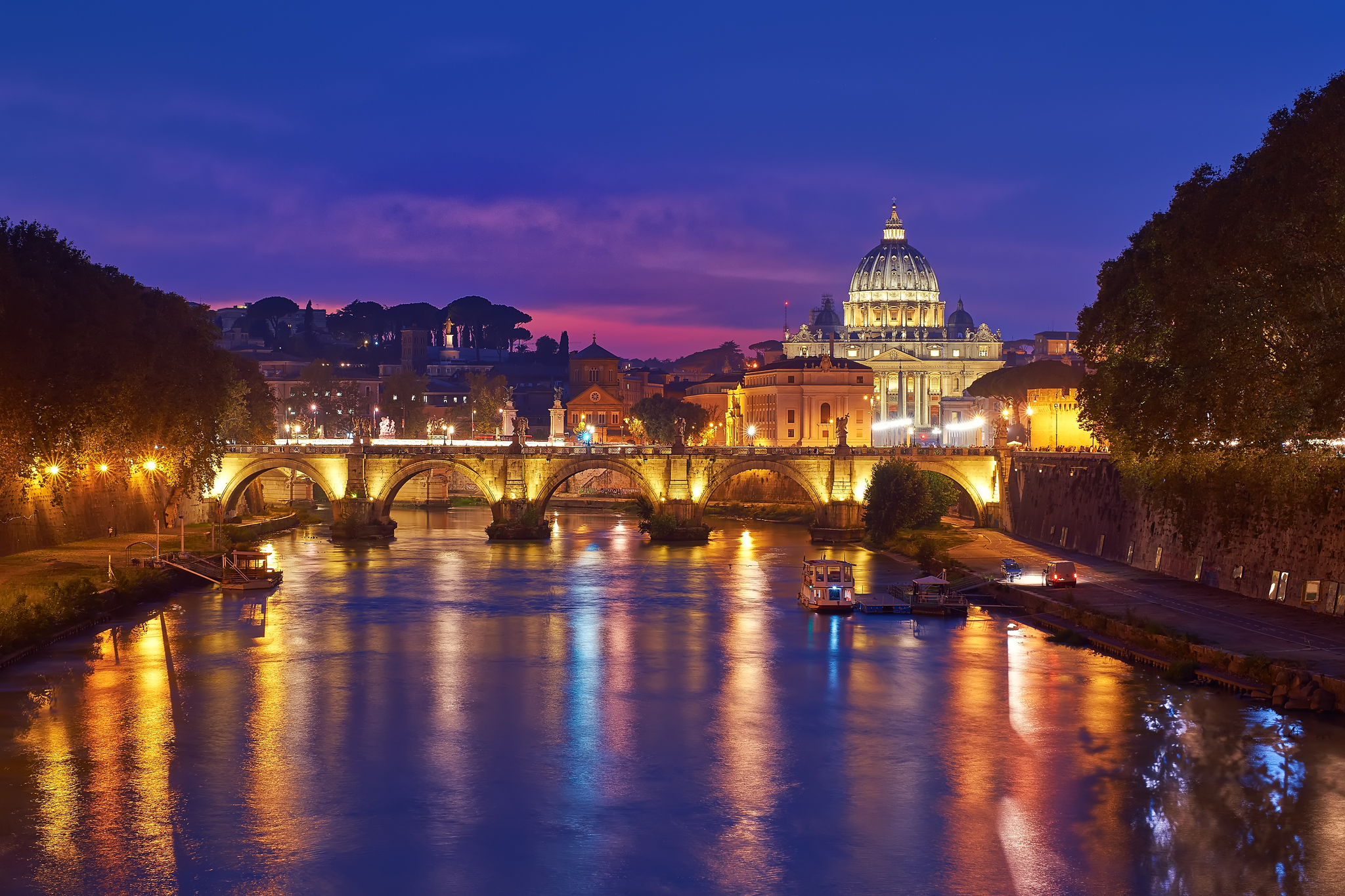
Standing on Ponte Umberto I as Saturday evening gathered its purple robes around the Tiber, I found myself witness to one of those everyday miracles that cities sometimes bestow upon the properly attentive. The Basilica di San Pietro rose before me, its dome catching the last copper coins of sunlight, while Ponte Sant’Angelo stretched its five graceful arches across the darkening water like fingers reaching toward some half-remembered benediction.
The camera’s long exposure required patience—that particular stillness that forces us into a deeper awareness of the world’s quiet choreography. In those extended moments of waiting, the bridge around me transformed into something like a theater of human yearning. Couples drew closer in the cooling air, their silhouettes merging against the illuminated backdrop of the basilica. Tourists positioned themselves carefully, seeking to capture not just an image but some essential truth about beauty that might be carried home like a sacred relic.
But it was the water that held me longest—the Tiber flowing with its ancient indifference beneath the weight of so much accumulated history. The lights from the bridge and the distant buildings scattered across its surface like fallen stars, each reflection a small meditation on the way beauty persists even in the most unlikely places. The river has carried away empires and love letters with equal disregard, yet here it was, still offering up these nightly exhibitions of light and shadow for anyone willing to pause and witness.
There is something about Rome that makes philosophers of us all, even those who came merely as tourists. Perhaps it is the way the eternal and the ephemeral exist here in such intimate proximity—the ancient stones bearing witness to countless contemporary gestures of affection, ambition, and wonder. The basilica’s golden illumination seemed to pulse with all the prayers it has sheltered, while the modern lovers on the bridge enacted their own timeless rituals of connection.
The evening deepened, and with it came that peculiar Roman magic—the sense that past and present are not sequential but simultaneous, that Caesar and Michelangelo and the young woman adjusting her scarf against the river breeze all inhabit the same eternal moment. The purple sky darkened to indigo, then to the particular black that only comes to cities that have learned to balance darkness with just enough light to make dreams visible.
As I finally released the camera’s shutter, capturing those seconds of accumulated light and motion, I understood something about why we travel, why we seek beauty, why we stand on bridges at dusk hoping to hold onto moments that will inevitably slip away like water through our fingers. Rome teaches us that permanence is not about stopping time but about recognizing the patterns that repeat across centuries—the way light falls, the way lovers meet, the way stone and water conspire to create something larger than the sum of their elements.
Oh Roma, indeed. You teach us that love is not just something we feel for each other, but something we can feel for places, for moments, for the way evening light transforms the ordinary world into something worth preserving, worth remembering, worth carrying forward into whatever darkness awaits. In your eternal twilight, we glimpse not just beauty, but the possibility that beauty might be enough—enough to justify the journey, enough to illuminate the way home.