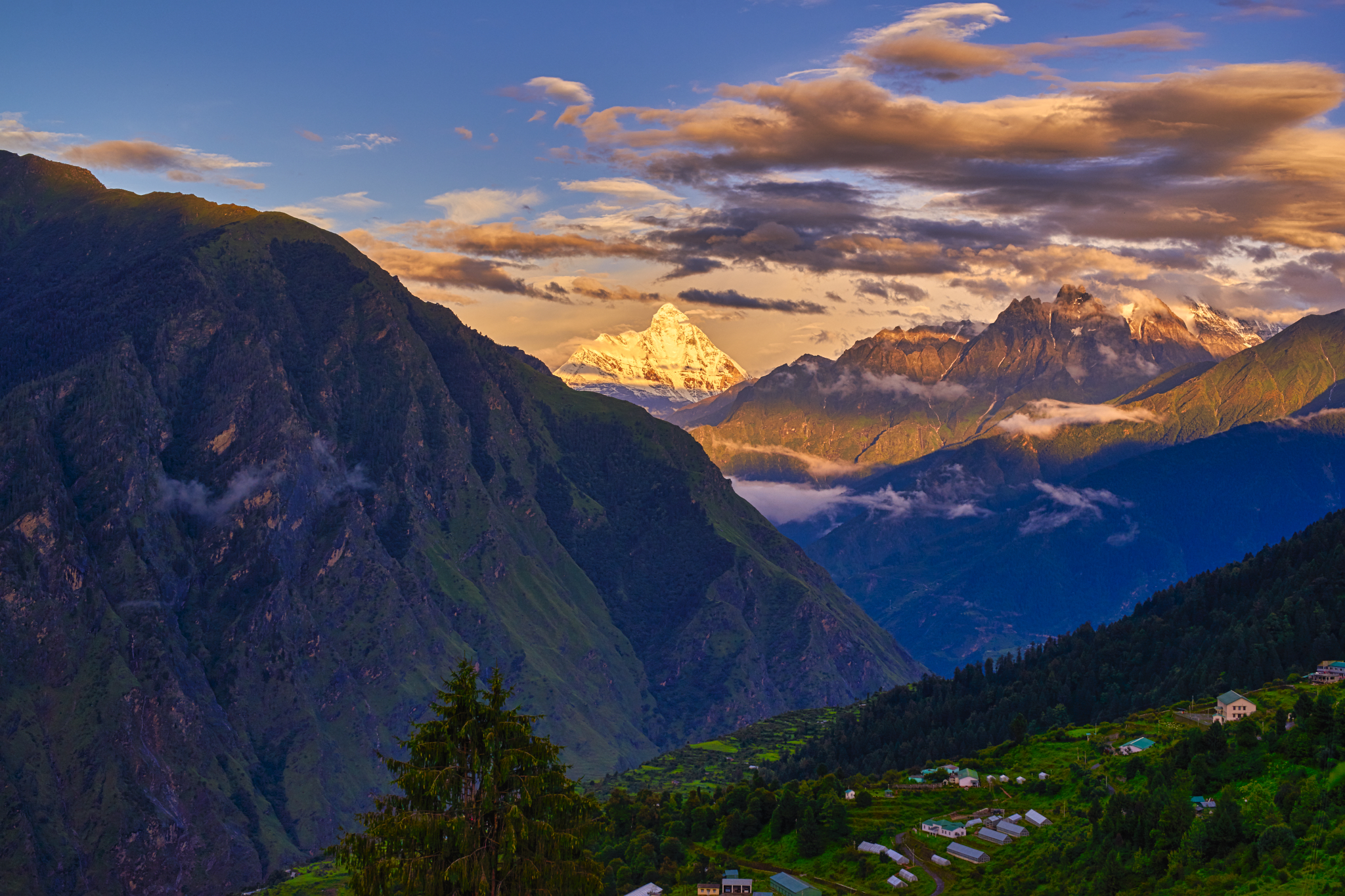
In the theater of evening, Nanda Devi emerges from the day’s last act like a goddess stepping into her own flame. The second sentinel of India’s vertical prayers, she wears the setting sun not as ornament but as essence—her snow-crowned summit becoming a torch lit by some cosmic hand that knows neither beginning nor end.
The mountains arrange themselves like devotees in her presence, each ridge and valley caught in the amber meditation of twilight. Clouds stretch toward her peak in long, molten ribbons, as if the sky itself were offering incense to this towering altar. The fire moves through stone and air with the unhurried certainty of truth revealing itself—not dramatically, but with the quiet authority of something that has always been.
There are moments when the world pauses its restless turning and shows us what lies beneath the surface of ordinary seeing. Here, in this valley nestled between earth’s ancient promises, time seems to hold its breath. The scattered houses below—those small testaments to human hope—become prayer flags in this vast temple of stone and light, reminding us that we are both witnesses to the sacred and inseparable from it.
This is what mountains offer those who have traveled far enough to receive it: the understanding that we are not separate from the fire that lights the peaks. The magic that renders us speechless is not something happening to us, but something we have always been—temporarily remembering itself in the presence of such overwhelming beauty.
In the silence that follows, when Nanda Devi finally releases the day’s last light, we carry within us the knowledge that we too are made of the same flame that sets mountains ablaze.