I went to Nubra Valley looking for landscapes and found instead the end of hurry.
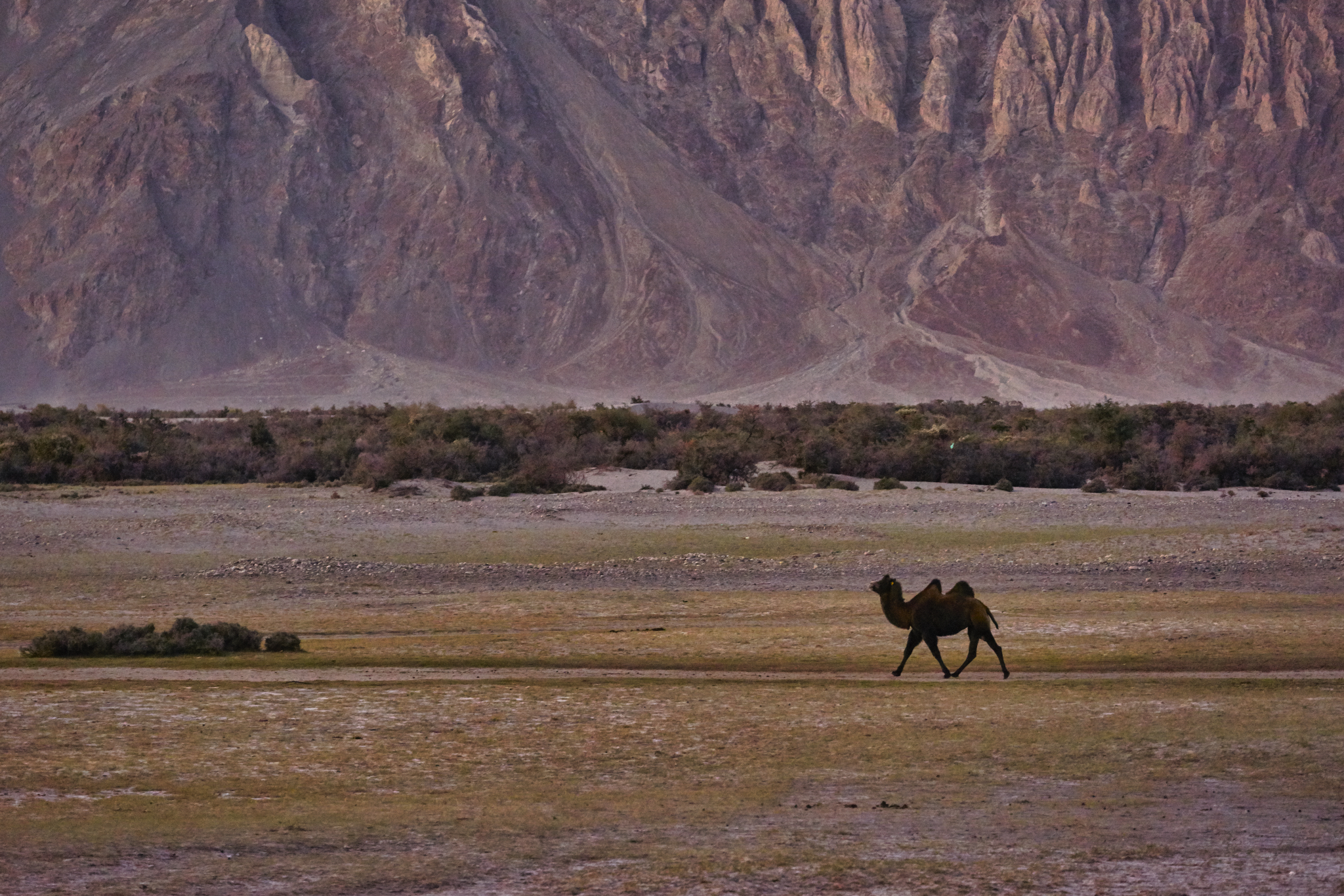
The camel was crossing into darkness. Not night—that would come later, absolute and star-shocked—but the bruised light that happens at this altitude when the sun remembers it has other worlds to attend to. The mountains had gone quiet in that geological way mountains have, their pleated flanks striped like the robes of monks who have knelt too long in prayer.
I had been standing there long enough that my shadow had disappeared. Or perhaps it had been longer than that.
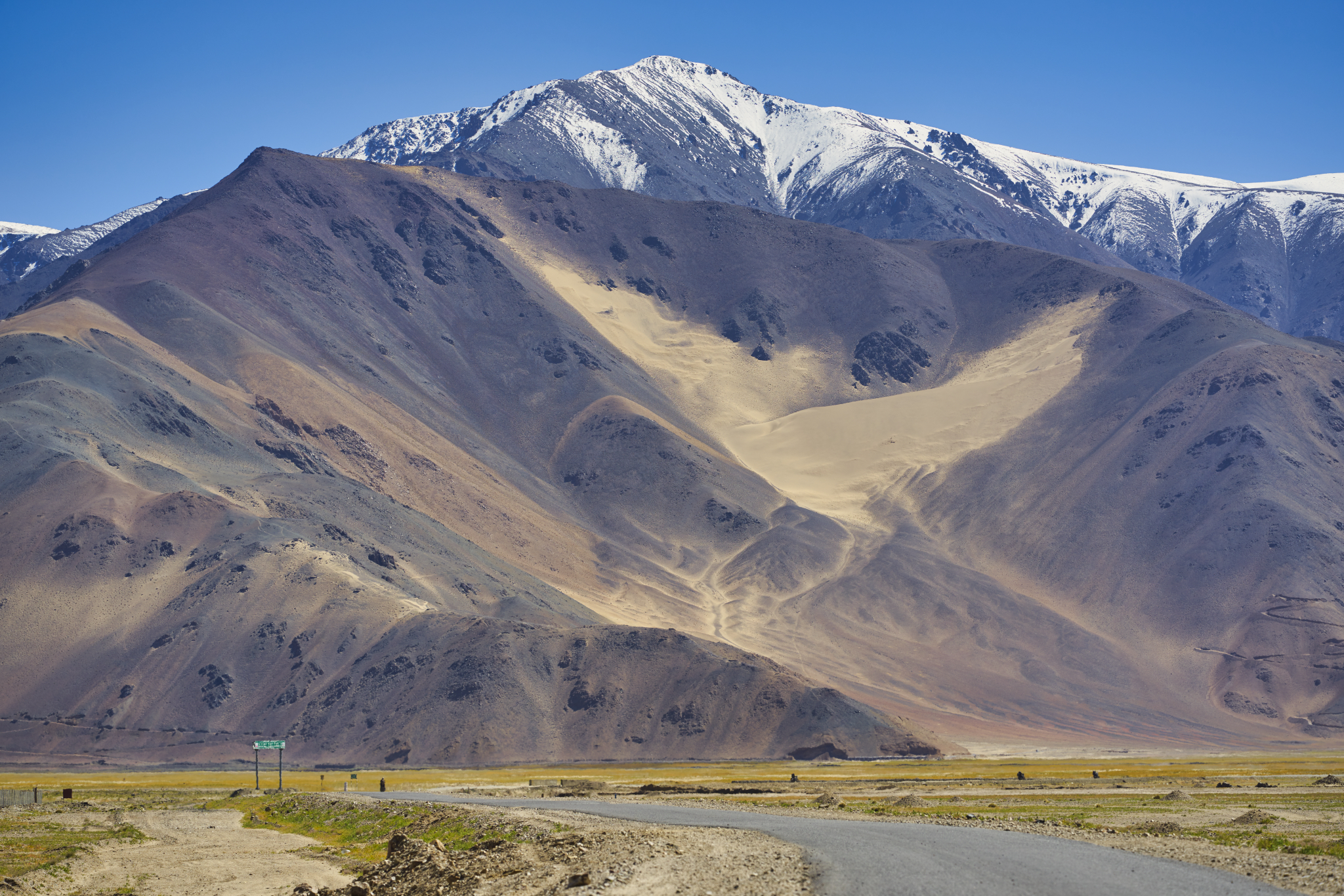
This is Nubra Valley—Ldumra in Ladakhi, meaning “valley of flowers”—though both names feel too small for what’s actually here. The valley sits north of Khardung La, where the Shyok and Nubra rivers have spent millennia convincing stone to become space. That day I saw no flowers, only the sand, the rock, the impossible geometry of water and time.
Time moves differently at this altitude, in these places where the earth shows you its bones. You think you’ve been watching for minutes and discover it’s been an hour. You think you’ll remember everything and find later you’ve remembered only fragments—the way the cold gathered, the particular silence, the sense that something essential was happening though you couldn’t say what.
The sand beneath my feet was fine and cold. The Hunder dunes stretch across this valley floor like a geologist’s afterthought—a pocket of Rajasthan smuggled into the Himalayas by wind and accident. Standing on them, you’re suspended between contradictions: desert and snow peaks, silk route and military zone, the improbable and the absolute. The dunes shift constantly but have been here longer than anyone remembers. Another paradox this place doesn’t bother explaining.
The camel moved with the rolling gait of something that has crossed deserts for so many centuries it no longer distinguishes between journey and destination. I think now it must have been walking long before I arrived. I think it might still be walking, somewhere in that valley.
It was a Bactrian camel—double-humped, a descendant of the animals that once carried silk and jade across empires. They still graze near Hunder, and this one was likely walking between there and Diskit, following routes older than borders, older than the names we’ve given these places. Maybe in Nubra, where traders once carried news of distant empires and monks still turn prayer wheels in monasteries clinging to cliffs, the past isn’t behind us but alongside us, walking the same paths we walk.
Behind it, that implausible ribbon of green—poplars or willow, something with roots wise enough to find water beneath stone. In any other landscape it would have been ordinary. There it was testimony. Not to hope, which is too human and too fragile, but to the fact that life doesn’t ask permission before insisting on itself.
I took the photograph. The shutter closed and opened like a breath.
What I couldn’t capture, what I’ve tried to remember since: the cold gathering in the low places. The smell of dust and something older than dust. How the sand gave slightly under my boots with each small shift of weight. How the silence wasn’t empty but full—layered with all the caravans that had crossed here carrying silk and jade and news of wars that are now just footnotes in books I’ve never read.
How I had traveled so far, through so many complications of the world—airports and cities and the noise of wanting—to arrive at this moment of not needing to arrive anywhere at all.
The camel kept walking. The light kept leaving. I kept standing there on those cold dunes.
And I remember thinking—or perhaps I only think now that I thought it then—that this is what it means to be pilgrimage. Not the arriving, but the slow opening that happens when the world is large enough and you are finally, blessedly, small.
The mountains didn’t care that I was there. The valley didn’t need my witness. And somehow that indifference felt like the kindest thing the world had offered me in years.
When I look at the photograph now, I see the camel, the mountains, that band of impossible green. What I don’t see, what the camera couldn’t hold: how it felt to stand there in Nubra Valley as the world grew dark. How my fingers had gone numb. How the wind carried the smell of stone and something older. How the sand whispered against itself in that particular way dunes have of speaking without words.
How it feels even now to remember standing there—the way certain moments don’t end when they end but keep happening somewhere inside you, quiet and permanent as the valley itself.